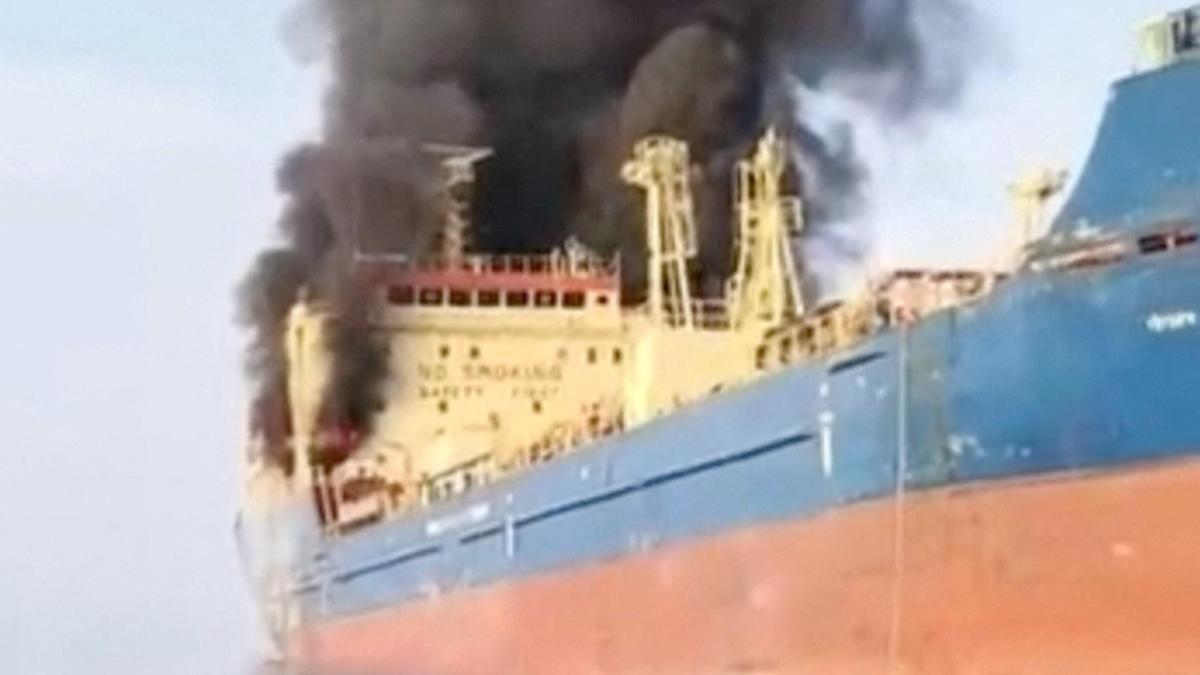
Iran’s intensifying conflict isn't just a regional headline. It’s a direct hit to your wallet. If you think the sight of massive oil tankers sitting idle in the Middle East is a distant problem, you haven't looked at the price of gas or the cost of shipping a container lately. We’re watching a slow-motion car crash in the Strait of Hormuz, and the global economy is in the passenger seat.
Right now, dozens of tankers are effectively stranded. Some are physically blocked, others are anchored because insurance premiums have skyrocketed to levels that make moving a single drop of crude a massive financial gamble. This isn't just about "disruption." It's about a fundamental breakdown in the most critical maritime chokepoint on Earth.
Why the Strait of Hormuz Is the Worlds Most Dangerous Nerve Center
The geography is a nightmare. The Strait of Hormuz is only about 21 miles wide at its narrowest point. Yet, roughly 20% of the world's total petroleum liquids pass through it every single day. When Iran or its proxies threaten this tiny strip of water, they aren't just poking a stick at their neighbors. They're putting a chokehold on global energy security.
Energy analysts at firms like Vortexa and Kpler have been tracking a significant buildup of "floating storage." That's a fancy way of saying ships that should be moving are instead sitting still, acting as expensive, stationary warehouses. When these tankers stop, the ripple effect is instant. Refineries in Asia don't get their crude. European heating costs spike. The logistics chain doesn't just bend; it snaps.
The Invisible Wall of Insurance and Risk
You might wonder why a captain doesn't just "sail through anyway." The answer isn't just about missiles or boarding parties. It's about the paperwork.
Marine insurers, particularly those associated with the Lloyd’s Market Association, have designated the Persian Gulf and surrounding waters as "Listed Areas." This means any vessel entering the zone has to pay an additional "war risk" premium. These rates don't just go up by a few dollars. We’ve seen them jump by 500% or more in a matter of days during peak tension.
For a Very Large Crude Carrier (VLCC) carrying 2 million barrels of oil, that insurance hike can add hundreds of thousands of dollars to a single voyage. Many shipowners simply won't take the risk. They’d rather let the ship sit in "safe" waters, even if it means missing delivery windows. It’s a game of chicken where the prize is a global recession.
How Stranded Tankers Drive Up Your Cost of Living
When tankers are stranded, the supply of available ships shrinks. This is basic economics, but with a brutal twist. Because ships are stuck or taking long detours around the Cape of Good Hope, the "ton-mile" demand increases. Essentially, we need more ships to move the same amount of oil because the trips are taking longer.
- Freight Rate Surges: When ship supply is tight, the cost to rent a tanker (charter rates) goes through the roof.
- Refinery Delays: If a refinery in South Korea or Japan expected a shipment on the 15th and it doesn't arrive until the 30th, they have to buy "spot" oil at a premium to keep the lights on.
- Consumer Pass-Through: Companies like Shell, BP, and Exxon aren't going to eat those costs. You’re going to pay for it at the pump and in the price of every plastic good or transported food item you buy.
Beyond Oil The Seizure of Commercial Vessels
It’s not just about the blockage. It’s about the direct targeting of assets. We’ve seen Iran-linked forces seize vessels like the MSC Aries, claiming ties to Israeli interests. This introduces a level of unpredictability that the shipping industry hates. If any ship can be labeled a "target" based on its ownership structure or its last port of call, no one is safe.
This "shadow war" at sea has turned the Gulf of Oman into a minefield of legal and physical risks. Crew members are being held as political pawns. Owners are frantically checking their corporate registries to see if they have any "links" that might make them a target. It’s chaotic. It’s messy. And it’s completely unsustainable for global trade.
The Failure of Naval Protection Missions
Operation Prosperity Guardian and other Western-led naval coalitions are trying to keep the lanes open. But there's a limit to what a destroyer can do against a swarm of drones or a shore-based missile battery. The cost-to-kill ratio is totally skewed. Using a $2 million interceptor missile to take out a $20,000 "suicide drone" is a losing mathematical equation for the US and its allies.
Shipping companies know this. That’s why despite the presence of high-tech warships, many of the world’s largest carriers—think Maersk or Hapag-Lloyd—have at various points simply opted to avoid the region entirely. They're choosing the long way around Africa. That adds 10 to 14 days to a journey. It burns more fuel. It emits more carbon. It’s a logistical disaster.
What You Should Watch for Next
The situation isn't going to "resolve" with a single treaty. We’re in a period of prolonged maritime instability. If you’re a business owner or an investor, you need to be looking at companies that have diversified supply chains and don't rely solely on Middle Eastern energy or transit.
Keep a close eye on the "dark fleet." These are older, often uninsured tankers that continue to move Iranian oil despite sanctions. As the conflict heats up, the risk of an environmental disaster from one of these decaying ships increases tenfold. A major oil spill in the Strait of Hormuz wouldn't just stop shipping—it would shut down the desalination plants that provide water to the entire region. That’s the real "black swan" event everyone is terrified of.
Monitor the Baltic Dry Index and the tanker freight indices. If those numbers start climbing while tanker speeds decrease, you know the "stranding" effect is worsening. Don't wait for the evening news to tell you things are bad; the shipping data will tell you weeks in advance. Start looking at domestic energy alternatives and shortening your supply lines now. The days of "cheap and easy" global shipping are over for the foreseeable future.