The needle on the dashboard is a tiny thing. It’s a sliver of orange plastic, thinner than a toothpick, yet it carries the weight of a global empire. When that needle sweeps past the halfway mark, a quiet anxiety begins to hum in the cabin of a commuter’s sedan in Ohio. When it edges toward the red, that same anxiety turns into a cold calculation in a boardroom in Manhattan.
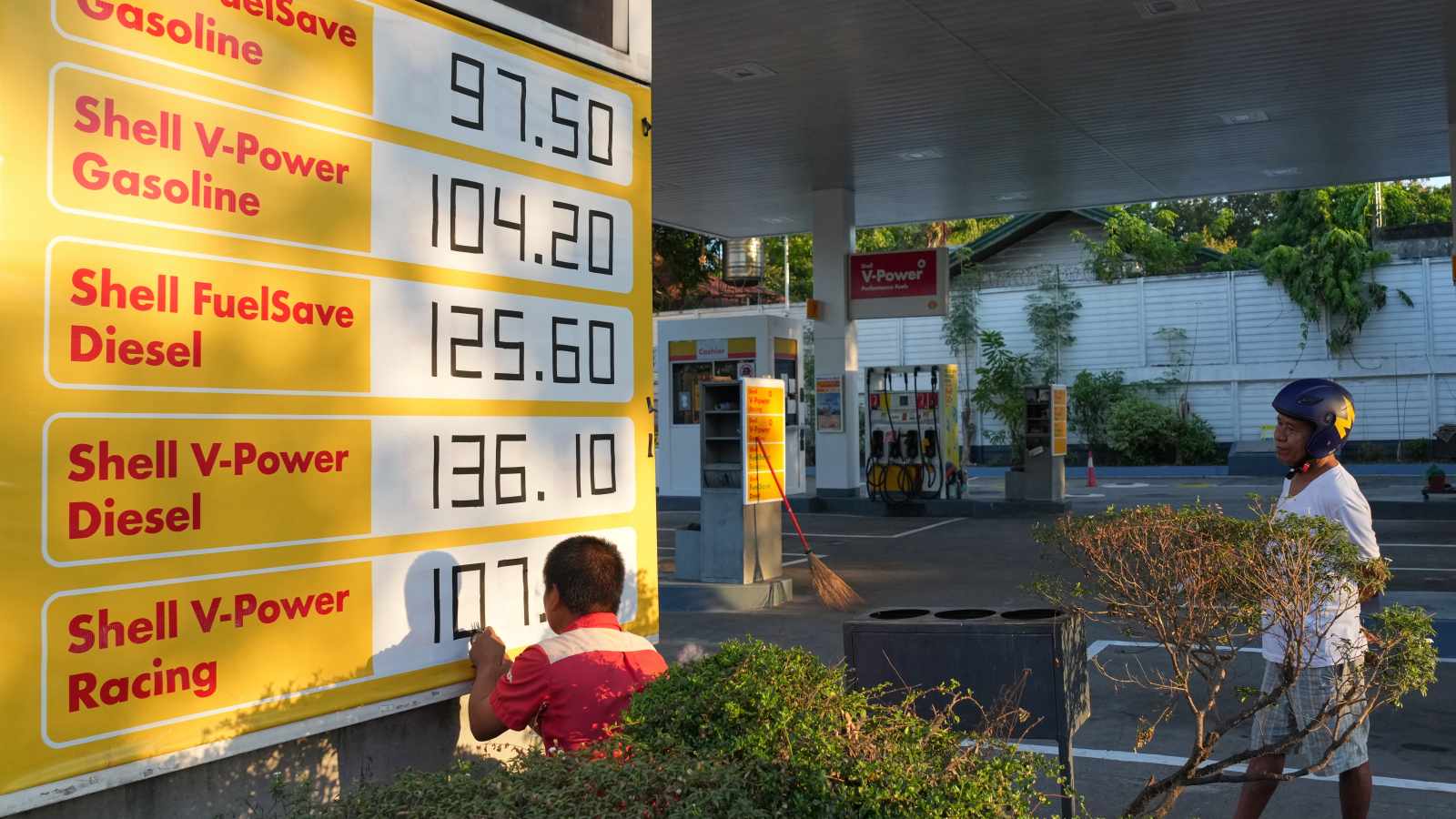
We talk about oil in abstractions. We speak of "barrels," "brent crude," and "futures." But oil isn't a ticker symbol. It is the literal friction of human existence. It is the cost of a head of lettuce reaching a grocery shelf in a desert. It is the ability of a nurse to drive to her night shift without choosing between a full tank and a full fridge. Don't miss our previous article on this related article.
Larry Fink, the man who sits atop BlackRock and watches the flow of trillions, recently leaned into a microphone to deliver a warning that felt more like a weather report for an approaching hurricane. He wasn't talking about a dip in the market. He was talking about $150.
That number is a tripwire. If you want more about the background here, Business Insider provides an informative breakdown.
If crude oil hits $150 a barrel, the delicate machinery of the post-pandemic recovery doesn't just slow down. It snaps.
The Anatomy of a Breaking Point
To understand why $150 matters, you have to look at a woman named Sarah. She is a hypothetical composite of the millions of people who live on the edge of the energy curve. Sarah doesn’t trade commodities. She teaches third grade. She drives twenty miles to work because she can’t afford to live in the district where she teaches.
When oil is at $75, the world feels functional. The logistics of her life—the gas, the heating bill, the plastic containers for her meal prep—are background noise. But oil is a foundational ingredient. It is baked into the price of her tires. It is woven into the polyester of her jacket.
As the price climbs toward $100, Sarah begins to cut. First, it’s the little things. No more premium streaming services. No more Saturday morning lattes. By the time the world hears the "warning shots" from CEOs like Fink, Sarah has already moved into a state of economic defense.
Then comes the surge.
The jump from $100 to $150 isn't just a 50 percent increase in a line graph. It is a psychological and systemic shock. At $150, the "energy tax" on the global population becomes so heavy that discretionary spending evaporates. People stop buying anything that isn't essential. When people stop buying, the "velocity of money"—the speed at which dollars change hands—plummets.
This is how a recession begins. Not with a bang, but with a billion people simultaneously deciding they can’t afford to go anywhere.
The Ghost of the 1970s
History isn't a straight line, but it does have a rhythm. We have been here before. In 1973 and again in 1979, the world learned what happens when the lifeblood of industry becomes a luxury.
Back then, it was about supply embargos and lines that wrapped around city blocks. Today, the crisis is more insidious. It’s not that the oil isn't there; it’s that the investment to get it out of the ground has turned into a political and environmental chess match. Fink’s warning points to a "supply-side" problem. We have spent years talking about reducing demand, but we haven't built the bridge to get there.
Imagine a bridge that is being demolished at one end while the other end hasn't been built yet. That gap in the middle? That’s $150 oil.
We are currently living in that gap. We want the green future—we need it—but the old world still runs on the black liquid. If we stop feeding the old world before the new one is ready to carry the load, the transition won't be a "seamless" evolution. It will be a collapse.
Why This Time Feels Different
There is a specific kind of dread that accompanies current energy forecasts. In previous cycles, a spike in oil prices was often met with a surge in production. If prices went up, drillers in Texas or North Dakota would rush to the fields, the supply would increase, and the pressure would ease.
But the rules changed.
Investors are no longer shouting "drill, baby, drill." They are shouting "pay me back." After a decade of burning through cash, oil companies are under immense pressure to return profits to shareholders rather than sinking billions into new wells.
When you combine that hesitant investment with geopolitical instability—wars in energy-producing regions and shifting alliances—you get a recipe for a "forced" recession. This isn't a recession caused by people overextending their credit on houses. This is a recession caused by the fact that the world simply costs too much to operate.
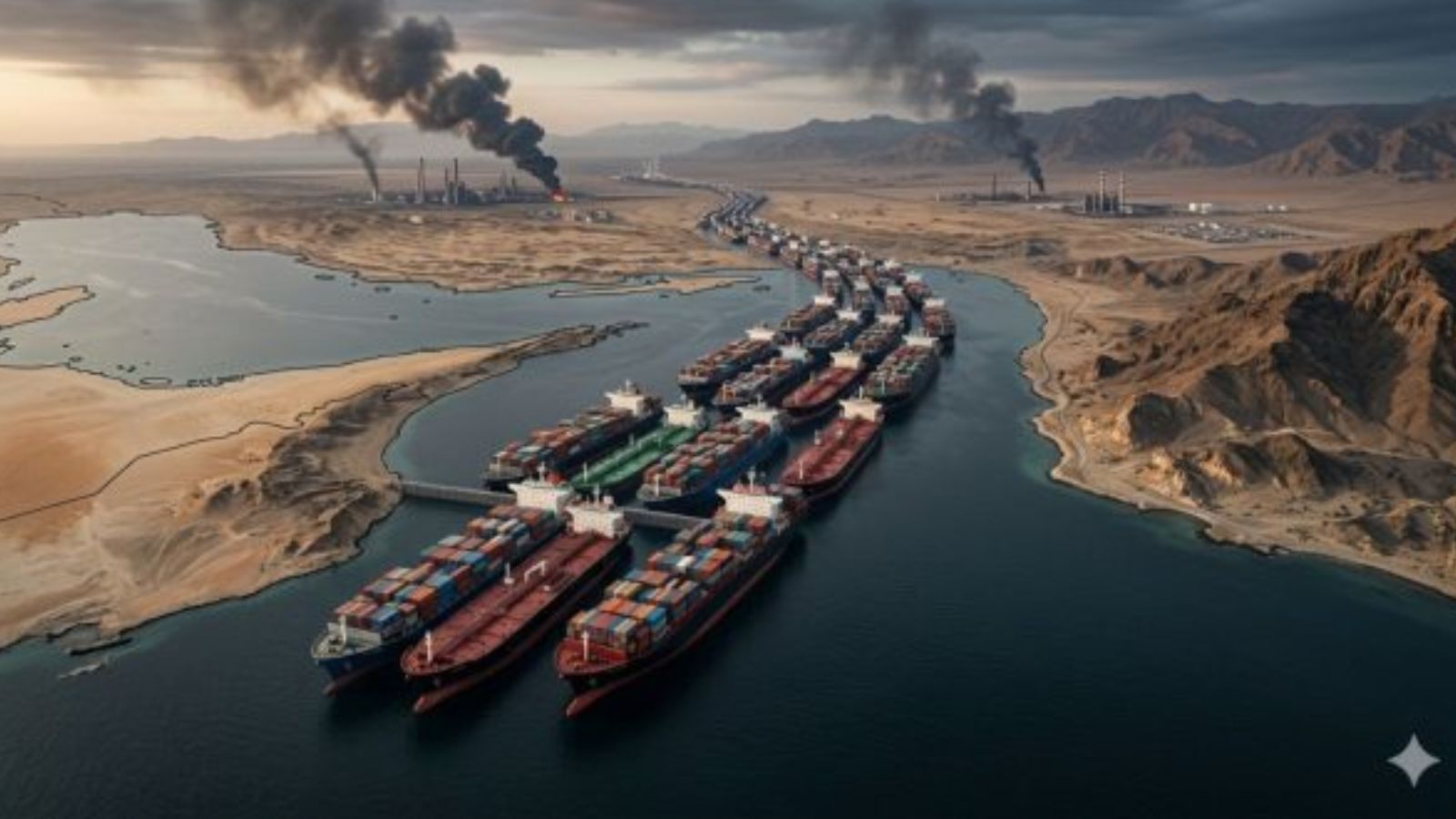
Think of a massive cargo ship. It takes miles for it to turn or stop. The global economy is that ship. If oil hits $150, the "fuel" for that ship becomes so expensive that the captain has to cut the engines just to stay afloat. The ship doesn't stop instantly. It drifts. It loses steerage. It becomes a hazard to everything around it.
The Dominoes in the Pantry
Let’s go back to Sarah’s kitchen. She’s looking at a carton of eggs.
To a Wall Street analyst, those eggs represent a data point in the Consumer Price Index. To Sarah, they represent a mystery. Why are they double what they were two years ago?
The answer is oil.
The tractor that tilled the soil for the chicken feed ran on diesel. The feed was processed in a plant powered by natural gas (which tracks with oil). The truck that carried the eggs to the distribution center burned gallons of fuel. The plastic carton was made from petroleum byproducts. The refrigerated case at the store sucked electricity from a grid that is still largely dependent on fossil fuels.
When Fink warns about $150 oil, he isn't just talking about the price at the pump. He is talking about a systemic inflationary fire that burns through every aisle of the grocery store.
If energy prices stay high for too long, "inflationary expectations" become baked in. Workers demand higher wages to keep up with the cost of eggs. To pay those wages, companies raise the price of the eggs again. This is the "wage-price spiral," the monster that haunted the economy for a decade forty years ago.
The only way the Federal Reserve knows how to kill that monster is to raise interest rates until the economy gets so cold that the fire goes out. But that "cold" is another word for unemployment.
The Invisible Stakes of the Transition
There is a cruel irony in this narrative. The very people who are most passionate about moving away from fossil fuels are often the ones most hurt by the price spikes that occur during the transition.
We are caught in a pincer movement. On one side, we have the existential threat of climate change, which demands we stop using oil. On the other side, we have the immediate threat of economic ruin, which happens if we don't have enough of it.
Fink’s warning is a plea for a "pragmatic" middle ground. It’s an admission that the world is a physical place, governed by the laws of thermodynamics and logistics, not just by ESG goals and spreadsheets.
We often think of "The Economy" as a separate entity, something that lives in our phones and on CNBC. But the economy is just a measurement of how much effort it takes for us to take care of one another. When oil hits $150, that effort becomes twice as hard.
The social fabric begins to fray. People get angry. They vote for extremes. They look for someone to blame. The "sudden global recession" Fink describes isn't just a period of negative GDP growth. It is a period of human contraction.
The Silent Road
Picture a highway at dusk.
Usually, it is a river of light—thousands of people moving toward home, toward family, toward a hot meal. Now, imagine that river thinning out. The lights are fewer. The movement is hesitant.
The trucks are parked in lots because the freight surcharges have made shipping a loss. The vacationers have stayed home. The teacher is looking at a bus schedule she hasn't used in ten years, wondering if she can make the three-hour round trip work.
This is the world at $150.
It is a quieter world, but not a peaceful one. It is the silence of a machine that has run out of grease. It is the stillness of a household that is holding its breath, waiting for the next bill to arrive.
We like to believe we are in control of our destiny, that our digital innovations and our sophisticated financial instruments have buffered us against the raw elements of the earth. But we are still, at our core, a species that moves things from place to place.
If the cost of that movement crosses the invisible threshold, the world shrinks.
We aren't there yet. The needle is still hovering, vibrating with the tension of a dozen global conflicts and a thousand policy decisions. But the warning has been issued. The tripwire is visible.
The question isn't whether we can afford $150 oil. We know we can't. The question is whether we have the collective will to build the bridge before we reach the edge of the canyon.
The orange needle continues to twitch.
Every time you hear a politician or a CEO mention a price per barrel, don't think of the money. Think of the friction. Think of the heat. Think of the moment when the machine finally stops turning because the cost of the turn is more than the value of the work.
That is the shadow of $150. It is a shadow that stretches over every driveway, every shipping lane, and every dinner table on the planet.
Would you like me to analyze how specific industries, like commercial aviation or international shipping, are currently hedging against this $150 scenario?