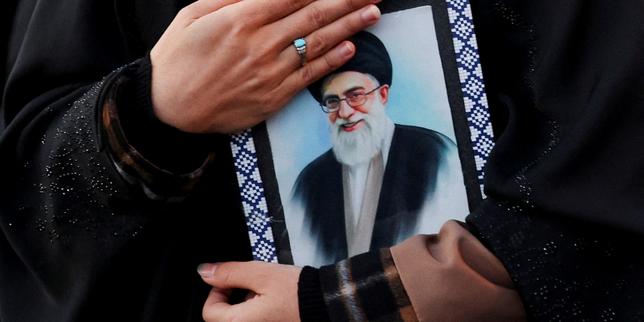
The Western obsession with the "imminent" collapse of the Iranian Islamic Republic is a decades-old hallucination. Every time a senior cleric coughs or a protest breaks out in a provincial city, the think-tank circuit in Washington and Paris begins salivating over the "impasse of the system." They look at the impending succession of Ali Khamenei and see a vacuum. They see a dead end. They see a regime that has run out of road.
They are looking at the wrong map.
The common consensus—most recently echoed by voices like Clément Therme—suggests that Khamenei’s death will expose a hollowed-out state incapable of reproducing itself. The argument is simple: the ideological fervor is gone, the economy is a wreck, and the youth are alienated. Therefore, the system must break.
This is lazy analysis. It treats the Iranian state like a fragile porcelain vase when it is actually a self-healing, modular polymer. The "impasse" isn't a bug; it’s a feature. The Islamic Republic has spent forty years perfecting the art of surviving through gridlock. If you think the passing of one 85-year-old man will dismantle a military-industrial complex that controls 40% of the national economy, you haven't been paying attention to how power actually solidifies in the 21st century.
The Succession is Already Over
Foreign observers love to speculate about the Assembly of Experts. They talk about constitutional procedures and the "selection" of the next Supreme Leader as if it were a high-stakes papal conclave.
It isn't.
The succession has already happened in the shadows. The transition isn't from one man to another; it is the final handoff from the clerical class to the Islamic Revolutionary Guard Corps (IRGC). While academics debate the legitimacy of "Velayat-e Faqih" (Guardianship of the Jurist), the IRGC has been busy building a deep state that doesn't need a charismatic holy man to function.
They need a placeholder. And they will get one.
The IRGC is no longer just a military branch. It is a multinational conglomerate, a venture capital firm, and a telecommunications giant rolled into one. I’ve watched analysts miss this for years: they look for "reformists" in the parliament when they should be looking at the balance sheets of the bonyads (charitable foundations). The system isn't in an impasse; it’s in a merger. The clerical facade is being maintained because it provides a convenient legal shield for a praetorian guard that has zero interest in democracy and even less interest in total collapse.
The "Economic Ruin" Fallacy
"The economy is failing, so the regime must fall." This is the most persistent lie in geopolitical analysis.
If economic misery guaranteed regime change, the Kim dynasty in North Korea would have ended in the 1990s. In reality, economic hardship often makes a population easier to control. When people are spending six hours a day in line for subsidized eggs, they don't have time to organize a revolution. They are trapped in a cycle of dependency.
The Iranian state has mastered "resistance economics." This isn't just a propaganda slogan; it’s a sophisticated system of smuggling, grey-market oil sales, and sanctions evasion. By forcing the economy into the shadows, the regime has effectively killed the independent middle class—the only group that could actually challenge their power. What remains is a dual-tier society: those connected to the IRGC-controlled supply chains and those struggling to survive.
The "impasse" Therme mentions assumes that a failing economy is a problem for the rulers. For the IRGC, a failing formal economy is a massive opportunity for the informal one. They own the ports. They own the borders. They own the black market. Every sanction placed on Iran increases the "middleman fee" that the regime's loyalists pocket.
The Digital Fortress
People point to the "Woman, Life, Freedom" protests as the beginning of the end. They see the bravery on the streets and assume that the digital age has made authoritarianism impossible.
The opposite is true. Iran has used the last decade to build one of the most sophisticated domestic internets on the planet—the National Information Network (NIN).
While Westerners were busy tweeting about "liberation," Tehran was busy building kill-switches. The NIN allows the state to shut off the outside world while keeping essential banking and government services running internally. They have turned the tools of connectivity into tools of surveillance. They aren't stuck in a technological impasse; they are at the forefront of "digital authoritarianism," a model they are now exporting to other regimes.
The assumption that "information wants to be free" is a Western comfort blanket. Information in Iran is whatever the state-controlled servers say it is. When the next leader takes over, he won't be fighting the internet; he will be wielding it.
The Wrong Questions
If you want to understand what’s actually happening in Tehran, stop asking "When will the regime fall?" and start asking "Who owns the infrastructure of the transition?"
People also ask:
- Is Mojtaba Khamenei the next leader? It doesn't matter. Whether it's the son, a quiet cleric, or a committee, the policy remains the same: survival through regional destabilization and nuclear hedging.
- Can the diaspora change things? No. The diaspora is disconnected from the logistical realities on the ground. Revolutions are won by the people who control the bread and the bullets, not the people with the best Instagram aesthetic.
- Will the IRGC take over directly? They already have. They just haven't changed the stationery yet.
The Brutal Reality of Stability
We have a bias toward thinking that "bad" systems are inherently unstable. We want to believe that corruption and oppression lead to a breaking point. But history is littered with "dead" systems that walked for centuries.
The Iranian impasse is actually a high-equilibrium trap. The various factions—the traditionalists, the hardliners, and the military—are so intertwined that none of them can move against the other without ensuring their own destruction. This creates a terrifying kind of stability.
The death of Khamenei won't be a "moment of truth." It will be a highly choreographed piece of political theater designed to signal continuity to the only audience that matters: the security apparatus.
Stop waiting for the collapse. Stop betting on the "inevitable" triumph of liberal values in a region where the state has successfully commodified dissent. The system isn't hitting a wall; it’s building a new one.
If you’re waiting for the "impasse" to clear, you’re going to be waiting for a long time. The Iranian state has realized that you don't need to solve your problems to stay in power—you just need to make sure you're the only one who can survive the chaos.
Prepare for a century of the Islamic Republic 2.0. It will be leaner, more militarized, and completely indifferent to your predictions of its demise.
The king is dying. Long live the machine.