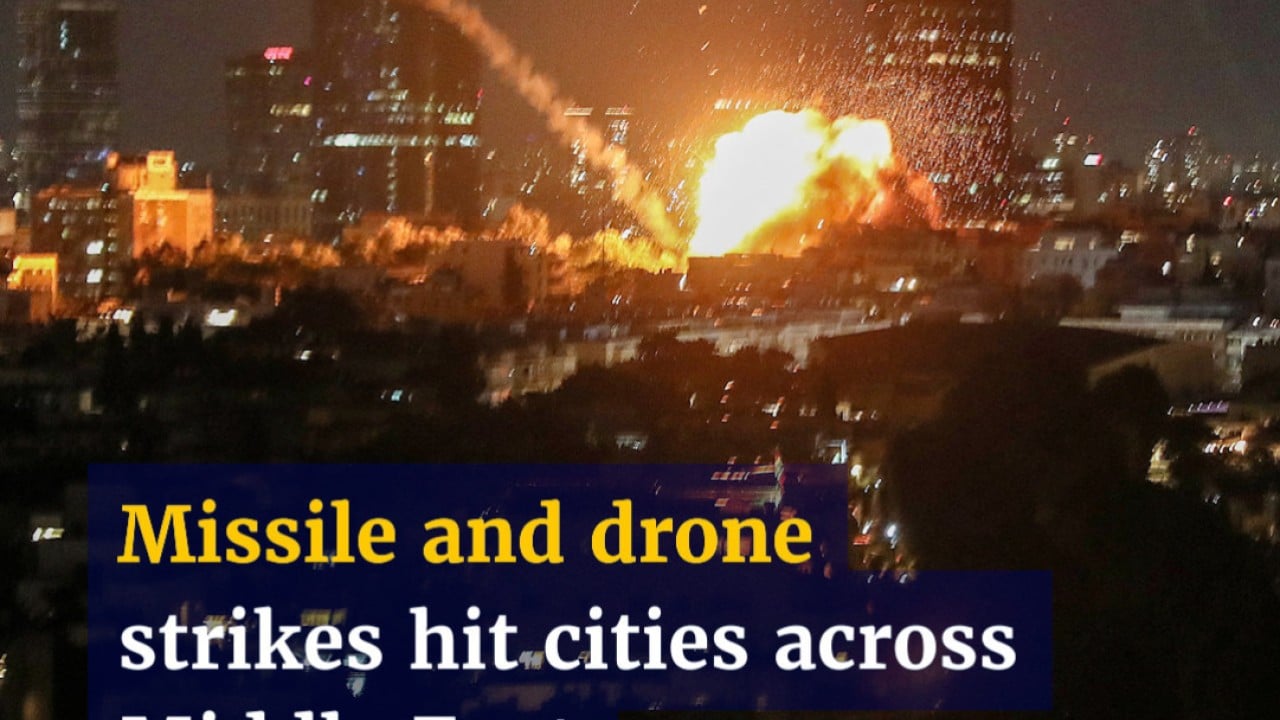
The tea in the samovar had long gone cold by the time the windows in Erbil began to rattle. It wasn’t the low, rhythmic thrum of distant thunder that usually rolls off the Zagros Mountains. This was a sharp, percussive crack—the kind of sound that doesn't just hit your ears but vibrates in the hollow of your chest. In that moment, a map pinned to a wall in a high-security office in Tehran became a living, breathing reality for families hundreds of miles away.
For decades, we have spoken about "Middle Eastern conflict" as if it were a board game played with static pieces. We talk about proxies, spheres of influence, and strategic depth. But when the missiles began crossing into Iraq, Pakistan, and Syria in a single, frantic week, the metaphor of a contained fire died. The fire has jumped the firebreak.
The Ghost of the Border
Consider a merchant in the Pakistani province of Balochistan. To him, the border with Iran is a line on a map drawn by colonial powers he never met. It is a porous, dusty expanse where fuel is smuggled and cousins visit one another for weddings. When Iranian missiles struck what they claimed were militant bases inside Pakistan’s sovereign territory, that line didn't just reappear. It glowed white-hot.
Pakistan, a nuclear-armed state with its own internal fractures, responded not with a diplomatic letter, but with its own volley of steel. Suddenly, two nations that had spent years maintaining a "cold peace" were trading high-explosive calling cards. This is how a regional conflict stops being regional. It becomes a contagion.
The core of the issue is no longer just about Israel and Gaza, though that remains the primary engine of the heat. The real story is the collapse of the "Red Line" system. For years, there was a tacit understanding of how far one could push before the neighbors pushed back. Those rules are in the shredder.
The Calculus of Chaos
Why now? Why here?
To understand the spread, we have to look at the pressure cooker of internal Iranian politics. When a domestic population is restless, nothing focuses the mind like an external shadow. By striking targets in three different countries within forty-eight hours, Tehran wasn't just hitting militants. It was performing a violent piece of theater for a global audience. It was a declaration: We can touch you anywhere.
But theater has a way of turning into a riot.
When Iran strikes Syria, it is often a message to Israel. When it strikes Iraq, it is a message to the United States. But when it strikes Pakistan, it enters a different arena entirely. This is the danger of the "spread." Each strike invites a counter-strike, and each counter-strike requires a "proportional" escalation to save face. It is a ladder with no top rung.
The Human Price of Strategy
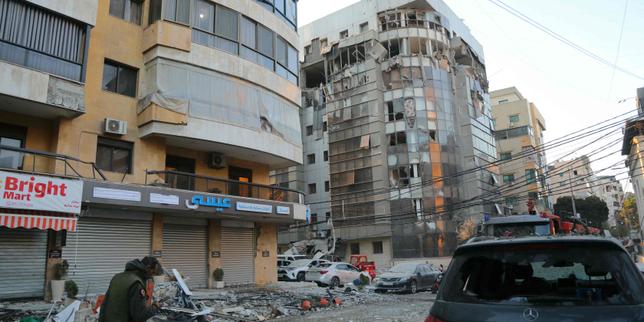
In the wreckage of a home in Erbil, the "invisible stakes" become agonizingly visible. We see the reports of a "businessman killed in a targeted strike." In the dry language of news tickers, this sounds like a surgical removal of a high-value asset. In reality, it is a father gone, a home leveled, and a community realizing that their city—once seen as a safe haven—is now a target range.
The psychological toll is the most profound export of this conflict. Fear travels faster than any ballistic missile. It settles in the markets of Amman, the cafes of Beirut, and the shipping lanes of the Red Sea.
The Red Sea is perhaps the most striking example of how a land-based conflict bleeds into the global bloodstream. The Houthi rebels in Yemen, fueled by Iranian support, have effectively choked one of the world's most vital economic arteries. They aren't just fighting a war; they are taxing the planet. Every time a container ship is forced to divert around the Cape of Good Hope, adding weeks to its journey and millions to its fuel bill, the conflict in the Middle East is reaching into your pocket. It is affecting the price of the sneakers you buy in London and the grain being shipped to East Africa.
The Myth of the Spectator
There is a comfort in distance. We watch the grainy footage of interceptions and the plumes of smoke on our screens and feel like spectators at a safe remove. We are not.
The spread of this conflict is a stress test for the entire international order. If a nation can strike across three borders in two days with minimal consequence, the very idea of national sovereignty begins to erode. We are entering an era of "unrestricted warfare" where the battlefield is wherever a drone can reach.
The logistics of this spread are facilitated by a new kind of weaponry. Cheap, mass-produced drones have democratized destruction. You no longer need a billion-dollar air force to project power across a continent. You need a basement, some fiberglass, and a GPS guidance system. This technological shift has outpaced our diplomatic ability to contain it.
The Echoes in the Dust
What happens when the smoke clears? Often, it is just a prelude to the next gust.
In Lebanon, the tension is a physical weight. People there describe the "waiting" as a form of torture. They watch the border with Israel, knowing that a single miscalculation by a mid-level commander could turn their capital back into a graveyard. This is the "human-centric" reality of regional spread. It is the inability to plan for next week. It is the suspension of life.
The invisible stakes are the lost generations—the children in Gaza, Yemen, and Eastern Syria who are learning that the only constant in life is the unpredictability of the sky.
We often ask when the "big war" will start. We fail to realize that for millions of people, it has already begun. It didn't start with a formal declaration. It started with a slow, creeping dissolution of the barriers that used to keep local fires from becoming firestorms.
Thesamovar in Erbil is still cold. The windows are still being replaced. And in the silence between the explosions, the map of the world is being redrawn in charcoal and ash.
The map doesn't care about the lines we drew in the sand. It only cares about who is left to walk upon it.