The Atlantic wind carries a scent of salt and fresh asphalt across the Tangier Med port. It is a restless, biting wind. For decades, this stretch of Moroccan coastline was defined by what left it: citrus fruits, textiles, and young men looking for work in the glittering cities of Europe. But the direction of the current has changed.
Now, the world is watching what arrives.
Gigantic roll-on/roll-off ships, looming like steel islands, are docking with increasing frequency. They carry the vanguard of a quiet revolution. From their cavernous bellies emerge thousands of sleek, silent vehicles bearing names that most Europeans couldn’t have pronounced five years ago. MG. BYD. Chery. Geely.
This isn't just a logistical update or a shift in trade routes. It is a fundamental rewiring of how the world moves. Morocco, once a peripheral player in the shadow of the giants, has become the most vital bridge on the planet.
The Architect on the Shore
Consider a woman named Amina. She is a hypothetical composite of the thousands of engineers now working in the Kenitra industrial zone, but her reality is felt in every paycheck signed in the region.
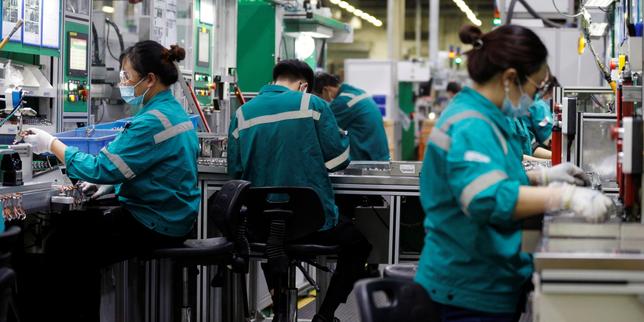
Ten years ago, Amina might have looked toward Paris or Madrid for a career in high-tech manufacturing. Today, she drives to a sprawling facility where the signage is written in Arabic, French, and Mandarin. She spends her days calibrating robotic arms that assemble battery components and chassis.
Amina isn't just building cars; she is building a fortress.
The "Green Line" of the Moroccan automotive sector didn't appear by accident. It was the result of a decade of cold, hard calculation. When the European Union signaled the death of the internal combustion engine by 2035, a frantic clock started ticking. European manufacturers scrambled. Chinese manufacturers, however, saw an opening. They didn't just want to sell cars to Europe; they wanted to become part of the European ecosystem without the overhead of European labor costs or the friction of long-distance shipping.
Morocco was the answer. It sits a mere nine miles from the Spanish coast. It has a Free Trade Agreement with the United States and a privileged status with the EU. It is the golden key.
The Weight of the Battery
The shift is most visible in the dust. In the southern regions of Morocco, the earth is being turned over at a staggering rate. Morocco holds over 70% of the world’s phosphate reserves. While phosphate is traditional fodder for fertilizer, it has a new, sexier cousin: Lithium Iron Phosphate (LFP) batteries.
This is the hidden heart of the narrative.
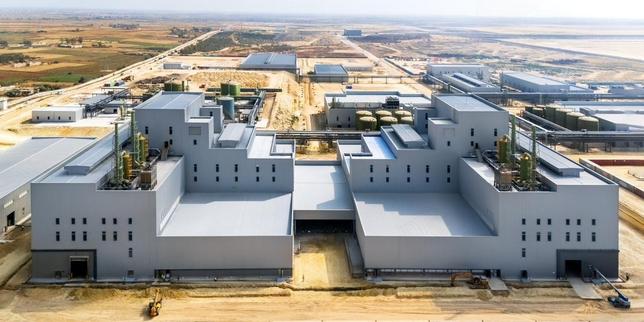
Western consumers often view electric vehicles as a choice between brands. To the industry, it is a war of chemistry and geography. By processing minerals locally and inviting Chinese battery giants like Gotion High-Tech to build "gigafactories" on Moroccan soil, the country has bypassed the traditional "middleman" phase of development.
Gotion’s planned $6.4 billion investment isn't just a number on a spreadsheet. It is a seismic event. To put that in perspective, that single investment represents a significant chunk of the nation’s annual industrial output. It is the sound of a country deciding it will no longer be a spectator in the green transition.
The Invisible Stakes of the Tariff War
The tension is thick. In Brussels, policymakers are sweating. They recently slapped provisional tariffs on Chinese-made electric vehicles, fearing that a wave of subsidized imports would wipe out Volkswagen, Renault, and Stellantis.
But there is a loophole wide enough to drive a truck through—or rather, a fleet of EVs.
If a car is "Made in Morocco," with enough local content and value-added assembly, it wears a different mask. It becomes a product of a Mediterranean partner. It benefits from the Euro-Mediterranean Association Agreement. For a Chinese CEO, building a plant in Tangier or Kenitra isn't just about efficiency; it is about "de-risking." It is a diplomatic camouflage.
The stakes for the average European driver are just as high, though less discussed. Most people just want an affordable electric car. They want the $25,000 EV that doesn't feel like a golf cart. European brands are struggling to hit that price point. Chinese brands, utilizing the Moroccan bridge, are poised to deliver it.
The dilemma is profound. Do we protect the legacy of European manufacturing at the cost of the climate and the consumer’s wallet? Or do we embrace the Moroccan-Chinese synergy and watch the traditional power centers of Stuttgart and Turin slowly fade?
A New Kind of Sovereignty
The story of Morocco’s rise is often told through the lens of "foreign investment," but that misses the human grit. There is a specific kind of pride in the cafes of Tangier. You see it in the way people talk about the "Boraq," Africa’s first high-speed train, which connects the industrial hubs.
Morocco has spent twenty years preparing for this moment. They built the ports first. Then they built the schools to train the engineers. Then they built the roads.
It is a masterclass in long-term thinking in an era of short-term quarterly reports. While Europe argued over carbon credits and the US flirted with protectionism, Morocco made itself indispensable.
But this path is not without its ghosts.
Dependency is a double-edged sword. By becoming the primary gateway for Chinese industrial expansion, Morocco ties its destiny to the stability of the Yuan and the whims of Beijing. There are whispers among local economists about the "debt trap" or the potential for these factories to become closed enclaves where the top management never speaks the local tongue.
Yet, for now, the momentum is undeniable.
The Engine of the Future
Walking through the Tanger Automotive City, the scale is dizzying. It is a city of silver boxes and humming transformers. You can see the containers stacked high, waiting for the short hop across the Mediterranean.
Inside those containers are the vehicles that will likely fill the streets of Paris, Berlin, and London by 2028. They are the result of Chinese battery tech, Moroccan mineral wealth, and a labor force that is young, hungry, and highly skilled.
The "Cold Facts" tell us that Morocco aims to produce one million cars per year by 2025.
The "Human Truth" tells us that the center of gravity has moved. The old world—the one where the West designed and the East assembled—is dead. We are entering a fragmented, multi-polar reality where the most important places are the ones that know how to sit in the middle.
Morocco has stopped being the door. It has become the hallway through which the future must pass.
As the sun sets over the Strait of Gibraltar, the lights of the Spanish coast flicker into life. They look close enough to touch. On the Moroccan side, the cranes continue to move, tireless and rhythmic. They are loading the tomorrow that Europe isn't quite ready for, one silent, lithium-powered car at a time.
The wind shifts again. It’s no longer just the scent of salt. It’s the smell of ozone and hot copper—the smell of a world being rebuilt from the ground up.
Would you like me to look into the specific trade agreements that allow Moroccan-made Chinese cars to bypass current EU tariffs?