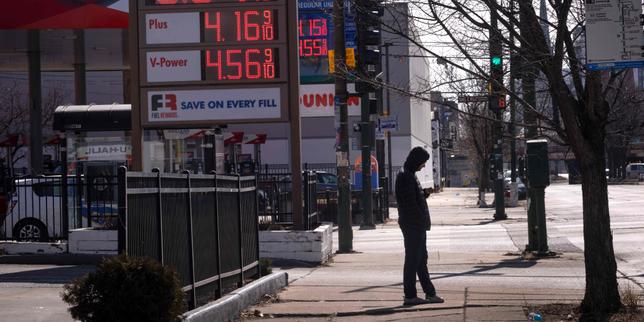
The gas station attendant in a small town outside of Lyon doesn't think about geopolitical "buffer zones" when he opens the shutters at 6:00 AM. He thinks about the frost on the pump handles and the first commuter who will complain about the price of diesel. But behind his mundane morning routine lies a mathematical tightrope stretched across the globe. We all walk it. We just rarely look down.
Most of us view the flow of oil like water from a tap—infinite, pressurized, and guaranteed. The reality is closer to a high-stakes game of musical chairs played with tankers and pipelines. When the music stops, the world doesn't just slow down. It begins a very specific, very documented countdown.
Most nations are currently sitting on a clock that ticks for exactly twenty-one days.
The Ghost in the Tank
Imagine a logistics manager named Marc. He oversees a fleet of sixty trucks delivering perishable food across Western Europe. For Marc, oil isn't a commodity traded on a screen in London or New York; it is the literal blood of his enterprise. If the price spikes by ten percent, his margins evaporate. If the supply stops, his world ends.
Marc operates on the assumption that the "Strategic Petroleum Reserve" is a vast, subterranean lake of safety. He envisions a fortress of energy that could power the nation for years if a war or a blockade severed the arteries of trade. He is wrong.
The strategic reserves held by the majority of industrialized nations are designed to mitigate shocks, not to replace the market. In a total cutoff scenario, once the commercial stocks at refineries are exhausted and the immediate "working inventory" dries up, the emergency reserves are all that remain. For many countries, these reserves provide a window of two to three weeks of normal consumption before the choices become impossible.
Three weeks.
That is the time it takes to plan a modest wedding. It is the length of a generous summer vacation. It is also the entire lifespan of our modern social order if the pumps run dry.
The Anatomy of a Drought
The first week of a supply crunch is defined by denial.
Governments issue statements about "abundance" and "precautionary measures." On the streets, the change is subtle. You might notice a line at the local station. A few more people take the train. The markets flicker with red numbers, but the grocery stores are still full. The ships currently at sea are still arriving, carrying the momentum of the previous month's stability.
By the second week, the denial turns into a frantic, localized friction. This is when the math of the twenty-one-day fuse starts to bite.
Refineries begin to "slug" their output. They prioritize emergency services and the military. Marc, our fleet manager, gets a notification that his fuel contract is being "force majeure'd." He can no longer guarantee that the yogurt and meat in his refrigerated trailers will reach the supermarkets. This is the moment the invisible becomes visible. The average citizen realizes that oil isn't just for cars; it’s for the plastic packaging on their food, the chemicals that treat their water, and the trucks that take away their trash.
The third week is the precipice.
The Buffer Illusion
We have been conditioned to believe that technology has moved us past this vulnerability. We talk about the energy transition and the rise of the electric vehicle as if we have already crossed the finish line. We haven't.
The global economy is still a heat engine. Every physical object you touched today—your phone, your chair, the floor beneath your feet—was moved by an internal combustion engine. The "immense stocks" cited by officials are a psychological comfort as much as a physical one. They are intended to prevent panic, to keep the "bids" in the market from turning into a vertical line of desperation.
Consider the complexity of a single barrel of crude. It isn't just burned. It is cracked and separated into a thousand different lives.
When stocks run low, you don't just lose "fuel." You lose the bitumens for road repair. You lose the naphtha for medicine bottles. You lose the lubricants that keep the turbines in power plants from seizing up. The twenty-one-day fuse is a countdown for the entire physical infrastructure of a functioning society.
The Geography of Anxiety
Distance is the enemy of security. A country like Japan or South Korea, islands of high-intensity industry with almost zero domestic production, lives in a state of permanent, quiet vigilance. Their reserves are a source of national pride, yet they are still tethered to the safety of the sea lanes.
Conversely, a nation with its own shale deposits or North Sea rigs feels a false sense of insulation. In a globalized market, a shortage in the Strait of Hormuz is a shortage everywhere. If the global price of a barrel triples because supply is choked, it doesn't matter if the oil was pumped from your own backyard—the local price follows the global panic.
We saw the tremors of this during the early 2020s. We saw it again when pipelines were sabotaged in Eastern Europe. Each time, the system buckled, but it didn't break. These events were "stress tests" that we passed by the skin of our teeth. They left us with the impression that the system is "robust."
It isn't. It is just very fast.
The efficiency of modern "just-in-time" delivery has stripped away the fat. We no longer keep months of inventory in warehouses because inventory is expensive. We keep it on the move. The tankers are our warehouses. The pipelines are our storage tanks. This makes the economy incredibly profitable during the good times and incredibly brittle during the bad.
The Human Cost of One Percent
Economists often speak of a "one percent shortfall" as a manageable fluctuation. To the person at the end of the line, that one percent is the difference between a job and a layoff.
If Marc’s trucks stop for three days, his drivers lose their wages. If they stop for three weeks, the grocery store shelves go gray. The social contract is written on the back of a steady supply of energy. When that supply is questioned, the contract begins to tear. We saw this in the "Yellow Vest" movements, where a mere change in tax—a few cents at the pump—triggered a national convulsion. Now, scale that from a tax hike to a total absence of product.
The "immense stocks" we are told about are a lie of omission. They are immense only if you compare them to a bucket of water. They are microscopic if you compare them to the voracious, unceasing hunger of a modern city.
A city like Paris or London consumes millions of liters of fuel every single day. The logistics of moving that volume are a miracle of engineering that works perfectly until it fails completely. There is no "middle ground" in a fuel crisis. You either have the pressure in the line, or you have air.
Beyond the Countdown
So we live in the shadow of the fuse.
We go to work, we buy our groceries, and we plan for next year, all while the reserves tick down in the background. This isn't a call for doomsday prepping or a retreat into the woods. It is a plea for a cold-eyed realization of how we actually live.
The transition to new energy isn't just an environmental "nice-to-have." It is a strategic escape from a countdown we didn't choose to start. Every wind turbine and every localized solar grid is a second added back to that twenty-one-day clock. Every efficiency gain is a lengthening of the fuse.
Until then, we rely on the tankers. We rely on the quiet, gray tanks buried in the outskirts of our cities, filled with the dark liquid that keeps the lights on and the trucks moving. We rely on the hope that the music never stops, because we have seen the chairs, and there aren't nearly enough to go around.
The next time you see a tanker truck pulling into a station, look at the driver. He isn't just delivering fuel. He is resetting the timer on a bomb that has been ticking since the industrial revolution began. He is the only thing standing between the morning commute and the long, cold silence of a world that ran out of time.
The silence is only twenty-one days away. It always has been.