The headlines are screaming about an assassination and the end of the world. Again.
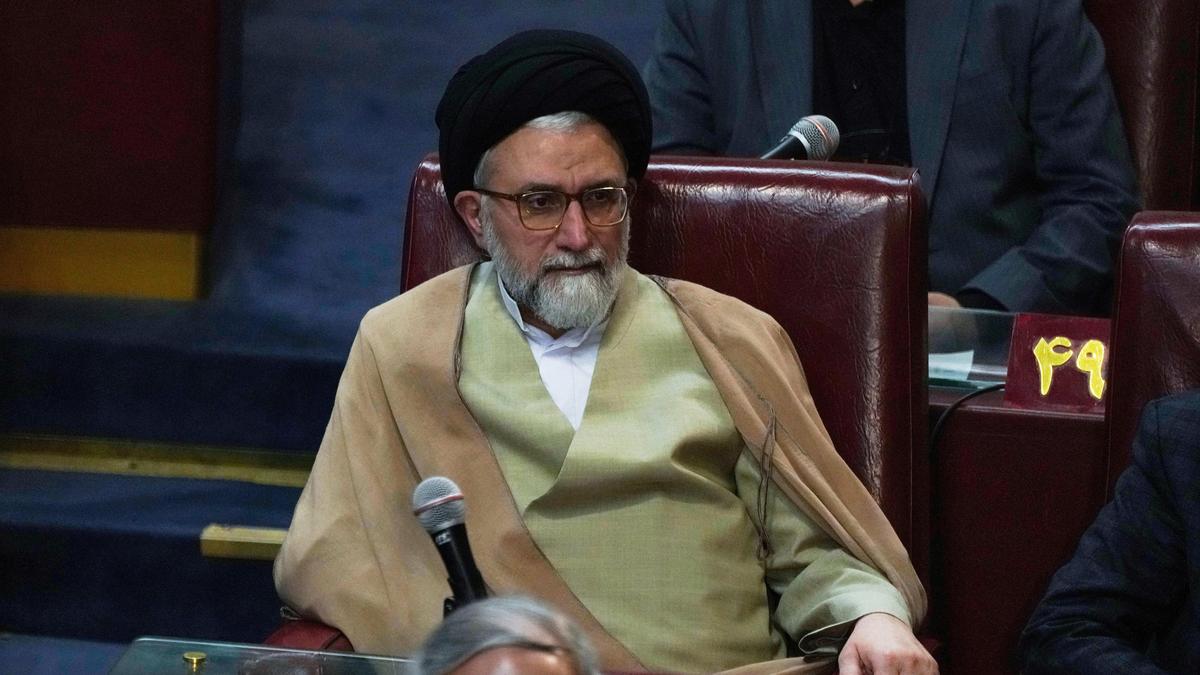
If you believe the mainstream narrative, we are one drone strike away from a regional apocalypse. The competitor rags are obsessing over the reported death of Iran’s Intelligence Minister and the "vow of revenge" regarding a gas field strike. They paint a picture of two titans on the brink of total war.
They are wrong. They are missing the mechanics of the game.
What we are witnessing isn't the prelude to World War III. It is a highly calibrated, high-stakes choreography of managed escalation. In the world of Middle Eastern intelligence, a "vow of revenge" is often a diplomatic pressure valve, not a tactical promise. If you want to understand what is actually happening, you have to stop looking at the explosions and start looking at the architecture of the silence.
The Myth of the Decapitation Strike
The media loves the "decapitation" narrative. They claim that killing a high-ranking official like an Intelligence Minister paralyzes a regime. This is a fundamental misunderstanding of how the Islamic Revolutionary Guard Corps (IRGC) and the Ministry of Intelligence (MOIS) actually function.
These are not fragile, top-heavy corporations. They are hydras.
In a decentralized intelligence apparatus, the "Minister" is often a political figurehead or a coordinator of disparate cells. I’ve seen analysts track these movements for decades; when a head is removed, the nervous system doesn't shut down. It hardens. The institutional memory of the MOIS is baked into its middle management and its technical protocols.
To suggest that Israel—a nation that understands the "Mowing the Grass" strategy better than anyone—believes a single strike ends the threat is insulting to Mossad’s intelligence. Israel isn't trying to "win" a war that has no finish line. They are managing a threshold of pain.
The Gas Field Fallacy
The "threat to gas fields" is the most misunderstood part of the current escalation. Pundits claim that targeting energy infrastructure is an act of economic desperation.
Incorrect. It is a signaling exercise.
Energy infrastructure in the Persian Gulf is the ultimate "Check" in a global game of chess. If Iran truly wanted to destroy the regional energy market, they wouldn't "vow" to do it. They would simply do it. They have the asymmetric capabilities—drone swarms, fast-attack boats, and proxy sleeper cells—to turn the Strait of Hormuz into a graveyard for tankers overnight.
The fact that they are announcing the threat tells you they are looking for a seat at the bargaining table, not a hole in the ground. They are using the global fear of $150-a-barrel oil as a shield for their internal instability.
Kinetic Theater vs. Technical Reality
While the news cycles focus on the "Kaboom," the real war is being fought in the electromagnetic spectrum and the SCADA systems of these very gas fields.
Most "explosions" reported in the media today are the physical manifestations of cyber-physical attacks. We are living in an era where a line of code is more lethal than a Hellfire missile. When a gas field "suffers a strike," you need to ask: was it a physical projectile, or did a logic bomb override the pressure valves?
The distinction matters. Physical strikes are for public consumption—they satisfy the "revenge" cycle for the domestic audience. Cyber strikes are the real escalations. They are the quiet whispers that say, "We own your infrastructure."
If Israel did indeed kill a high-ranking intelligence official, the "revenge" won't be a missile hitting a building in Tel Aviv. It will be a catastrophic failure of a desalination plant or a blackout in a major metropolitan grid. That is the currency of modern conflict.
The Industrial-Intelligence Complex
Why does the media keep getting this wrong? Because the "Permanent War" narrative is profitable.
- Defense Contractors: Every time a "revenge strike" is promised, stock prices for missile defense systems surge.
- Intelligence Agencies: These headlines justify massive budget increases for "human intelligence" (HUMINT) and "signals intelligence" (SIGINT) capabilities.
- Political Leaders: Nothing unites a fractured domestic base like an external boogeyman.
I’ve sat in rooms where "escalation" was treated as a product to be managed, not a disaster to be avoided. The goal is never total victory; total victory is expensive, messy, and eliminates the need for your department next year. The goal is Sustainable Conflict.
The People Also Ask... And They Are Asking the Wrong Things
"Will this lead to a direct war between Iran and Israel?"
The premise is flawed. They have been in a direct war for twenty years. It just doesn't look like 1944. It looks like 2026: assassinations, malware, and proxy skirmishes. A "hot" conventional war serves neither side. Iran loses its regime; Israel loses its economy and international standing.
"Can Iran actually retaliate?"
They already are. Retaliation isn't a single event; it's a constant pressure. They retaliate via Hezbollah in Lebanon, via the Houthis in the Red Sea, and via hackers in the shadows. To look for a "big event" is to miss the thousand small cuts that are actually doing the damage.
The Technical Vulnerability Nobody Talks About
We talk about ministers and gas fields, but we ignore the Silicon Bottleneck.
Both Iran and Israel are racing toward AI-integrated battlefield management. The side that can process satellite imagery, intercept communications, and deploy autonomous assets the fastest wins the "Grey Zone" war.
Israel’s "Gospel" AI system, used to generate targets at scale, is a leap forward in the industrialization of war. Iran is countering with massive investments in low-cost, high-yield drone tech that utilizes off-the-shelf components to bypass sophisticated defense grids.
The death of a Minister is a tragedy for a family and a setback for a department, but it doesn't change the math of the algorithm. The algorithm doesn't care about revenge. It cares about efficiency.
The Problem With "Traditional" Analysis
Standard reporting relies on the "Great Man" theory of history—that individuals drive events. This is an archaic lens.
In the modern Middle East, events are driven by:
- Logistics: Who can move parts through a sanctioned border?
- Bandwidth: Who can maintain an encrypted command and control (C2) node under heavy jamming?
- Social Engineering: Who can flip a disgruntled technician at a gas plant?
If you are reading about "vows of revenge," you are reading the script for the masses. If you want the truth, look at the movement of shipping containers and the fluctuations in local server pings.
Stop Falling for the Hype
The competitor’s article wants you to be afraid. Fear generates clicks. Fear keeps you glued to the "Breaking News" banner.
But here is the cold, hard truth: Both Tehran and Jerusalem are rational actors. They are playing a game of brinkmanship where the primary rule is Survival.
A direct, all-out war is an existential threat to both. Therefore, they will continue this shadow dance. They will kill each other's officials. They will sabotage each other's energy plants. They will trade barbs at the UN. And they will do everything in their power to ensure that the "Total War" everyone predicts never actually happens.
The "revenge" being promised is for the posters on the street in Tehran and the headlines in the West. Behind closed doors, the conversation is about red lines, back-channels, and how to keep the oil flowing—or the price high—without burning down the house.
You are being sold a drama. Don't mistake the theater for the battlefield.
Stop waiting for the big bang. The war is already here, it’s just quieter than they’re telling you.