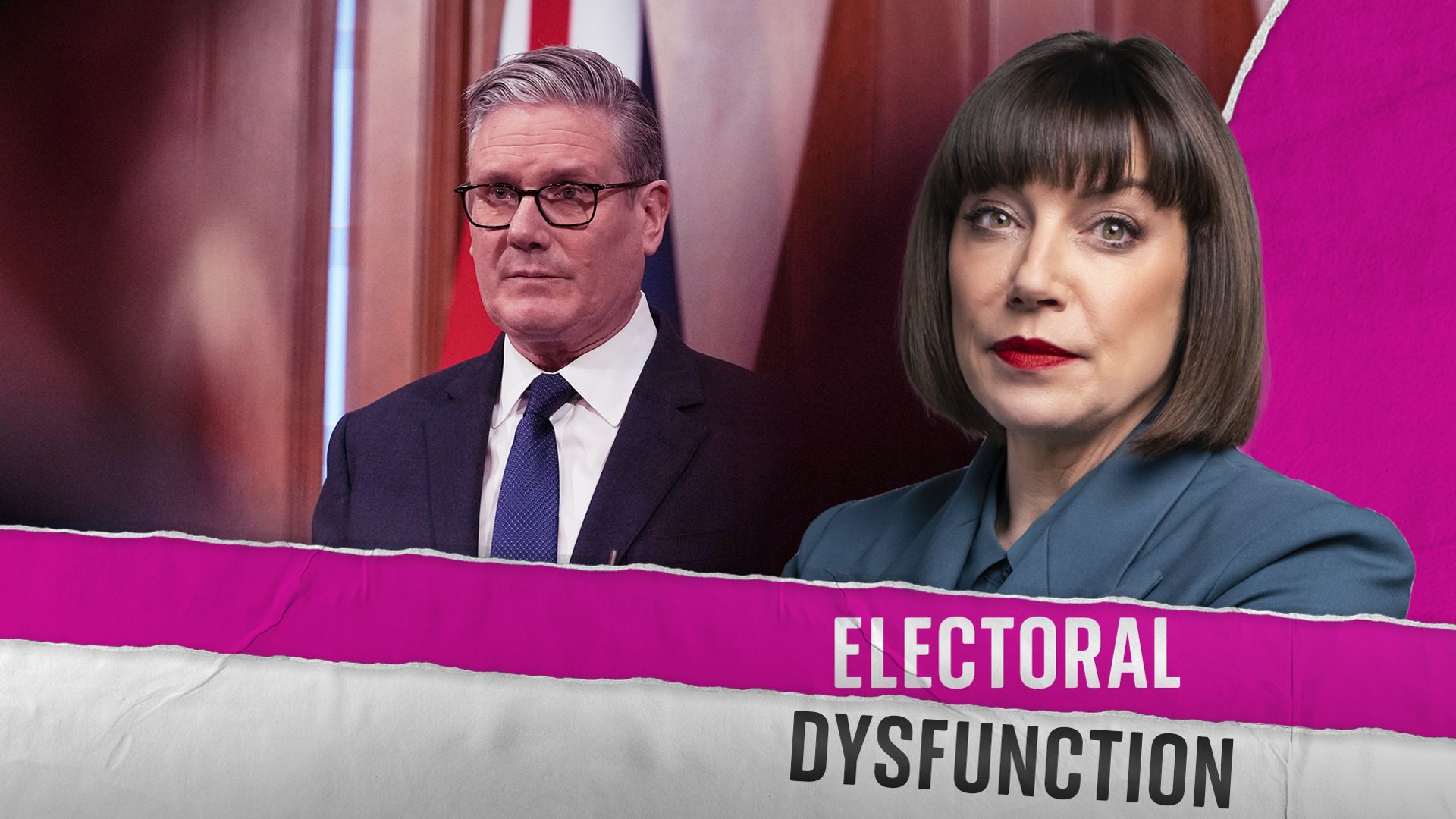
The media class is clutching its collective pearls over Keir Starmer’s decision to bin Olly Robbins. The narrative is already set: this is a "nuclear" escalation, a declaration of war against the Mandelsonian old guard, and a move that signals chaos at the heart of No. 10. They are wrong. This is not a crisis of leadership or a chaotic explosion. It is a long-overdue professionalization of a government that has spent too much time indulging the egos of the 1990s.
Calling the dismissal of a civil servant a "nuclear bomb" is the kind of hyperbole used by people who have never had to run a high-stakes organization. In the private sector, if a senior advisor doesn't fit the culture or the specific strategic direction of the CEO, they are gone by Monday morning. The fact that this is considered scandalous in Westminster shows how insulated the political bubble is from the reality of modern management.
The Robbins Myth and the Cult of the Permanent Secretary
The obsession with Olly Robbins stems from a misplaced nostalgia for the "Rolls-Royce" civil service. During the Brexit negotiations, Robbins was treated as the ultimate technocrat, the man who knew the machinery better than the ministers. But what did that actually yield? Years of gridlock, a deal that satisfied no one, and a civil service that became increasingly politicized while pretending to be neutral.
I have watched organizations burn through millions of pounds trying to force "legacy talent" into new systems. It never works. Robbins represents a specific era of high-level administrative maneuvering that is fundamentally at odds with the "mission-led" government Starmer is trying to build. You cannot build a new house using architects who are still trying to save the condemned building next door.
The "lazy consensus" suggests that Starmer needs these figures for stability. On the contrary, keeping them creates friction. Every meeting becomes a debate about "how we used to do things" rather than "how we get things done now." Sacking Robbins isn't a sign of instability; it’s a sign that Starmer actually understands the difference between an advisor and a roadblock.
Mandelson Is a Ghost Not a Kingmaker
The second half of this manufactured row involves Peter Mandelson. The pundits love a "Lord of the Rings" style struggle between the architect of New Labour and the current regime. It makes for great copy. It’s also completely irrelevant.
Mandelson’s influence is a shadow. He is a master of perception, but his strategic utility peaked in 1997. The challenges of 2026—global supply chain fragility, the AI-driven labor shift, and a post-Brexit regulatory landscape—cannot be solved by the dark arts of spin. Starmer’s willingness to distance himself from Mandelson’s preferred personnel isn't an insult; it’s an admission that the tools of the past are blunt.
Imagine a scenario where a tech startup hires a veteran IBM executive from the 80s to lead their product launch. The executive is brilliant, has a CV a mile long, and knows everyone in the industry. But he still wants to sell mainframes in a world of cloud computing. You don't keep him around out of respect. You fire him because he’s an expensive distraction.
The Efficiency of Brutality
There is a weird squeamishness in British politics about firing people. We prefer the "gentle nudge," the sideways move to a quango, or the elevation to the House of Lords. This culture of failure-avoidance is exactly why the British state feels so sclerotic.
By making a clean break with Robbins, Starmer is signaling that the era of "failing up" is over. This is the "nuance" the competitor articles missed: it’s not about the individual; it’s about the precedent. If the most high-profile civil servant in the country can be let go because he doesn't align with the Prime Minister's vision, it puts the rest of Whitehall on notice.
Efficiency requires a degree of brutality. You cannot reform the NHS, fix the housing crisis, or decarbonize the grid while walking on eggshells around the sensitivities of the Cabinet Office.
Dismantling the Stability Argument
People also ask: "Doesn't this create a vacuum at the heart of government?"
This question is fundamentally flawed. It assumes that there is only a finite pool of "super-civil servants" capable of running the country. This is the Great Man Theory applied to bureaucracy, and it’s nonsense. There is a deep reservoir of talent in the mid-levels of the Civil Service—people who haven't spent the last decade fighting internal turf wars—who are ready to execute policy without the baggage of the Robbins-era politics.
The vacuum is an illusion. When you remove a large, ego-driven personality from a room, it doesn't leave a hole; it leaves space for the people actually doing the work to speak up.
The Risks of the Clean Break
I’ll admit the downside: this approach creates enemies. Robbins and the Mandelson circle have long memories and loud megaphones. They will use every media contact they have to frame this as "amateur hour." They will leak stories about "chaos in the corridors" every time a policy hits a minor snag.
But that is a PR risk, not a systemic risk. A systemic risk would be keeping a team that is fundamentally misaligned with your objectives. Starmer has chosen the PR hit over the operational drag. That is the correct trade-off.
The real danger isn't that Starmer is being too aggressive; it’s that he might stop here. If this is just a one-off scalp to prove he’s tough, it’s a waste of time. If it’s the beginning of a total audit of the senior civil service and the advisory boards, then we are actually getting somewhere.
Stop Asking if it Was Polite and Start Asking if it Works
The debate around this "row" is fixated on the etiquette of the sacking. "Was it handled well?" "Did he get a phone call?" "What will the Reform party think?"
These are the wrong questions. The only question that matters is whether the government is now better equipped to deliver its "Five Missions." By removing a figure associated with the status quo, the answer is an objective yes.
The status quo hasn't worked for the UK for fifteen years. Why on earth would we want to keep the people who curated it? Starmer isn't burning the house down. He’s taking out the trash.
The noise you hear isn't a bomb going off. It’s the sound of a leader finally deciding that his mandate matters more than the feelings of the Westminster establishment. If you're upset about Olly Robbins losing his job, you're not worried about the country; you're worried about your own access to the old power structures.
The "nuclear bomb" narrative is a desperate attempt by the old guard to remain relevant. It’s a pathetic display of a dying elite trying to convince the public that their specific brand of bureaucratic theater is essential to the state. It isn't.
Starmer has finally realized that you can't govern a modern country by committee with your predecessors' favorite advisors. You pick your team, you clear the decks, and you get to work.
The row isn't a sign of weakness. It’s the first real sign of strength we've seen from this administration. Get over it.
Move on. There’s a country to run.