The humid air in Tuen Mun usually carries the scent of the sea and the exhaust of idling buses. On a mundane Saturday in April, it smelled of metal and old rubber. Two men stood on a patch of pavement, separated by a bicycle and a debt of 1,000 Hong Kong dollars. In the grand scheme of a city fueled by billions in high-finance transactions, it was a microscopic sum. It was roughly the price of a decent dinner for two in Soho, or a few rounds of drinks at a rooftop bar.
But for Chan Wing-yan and So Ka-ho, that four-figure tally was the center of the universe.
Money is never just a number. It is a proxy for respect. When we negotiate over a used item—a laptop, a sofa, or a weathered bicycle—we aren't just haggling over the depreciation of parts. We are measuring how much we value the other person's word. On that afternoon, the measurements didn't align. The tension snapped.
By the time the sun set, one man was clinging to life and the other was facing a descent into the judicial system that would strip away four years of his freedom.
The Anatomy of an Instant
Violence is rarely a choreographed affair. It is clumsy. It is frantic. It is a series of physiological betrayals where the brain’s prefrontal cortex—the part that weighs consequences and remembers the law—is sidelined by the amygdala.
Consider the mechanics of a fall. When a human body is shoved, physics takes over with a cold, mathematical indifference. If the person is unprepared, if their hands are occupied or their balance is skewed by the weight of a bicycle, they become a pendulum.
In the case of So Ka-ho, the victim, the momentum was catastrophic.
He fell backward. The back of his head struck the unforgiving concrete of the cycling track. There is a specific, sickening sound when bone meets pavement—a dull thud that signifies the immediate displacement of brain tissue and the rupture of delicate blood vessels. It is a sound that haunted the witnesses. It is a sound that Chan Wing-yan, the man who delivered the push, likely hears every time he closes his eyes in a prison cell.
The medical reality of such an injury is a downward spiral. A subdural hematoma isn't just a bruise; it is a ticking clock. As blood pools between the brain and its outermost covering, pressure mounts. The brain, which has nowhere to go inside the rigid cage of the skull, begins to compress. Functions fail. Consciousness flickers like a dying bulb. So remained in a coma for months, a ghost in a hospital bed, before his body finally surrendered.
The Value of Four Years
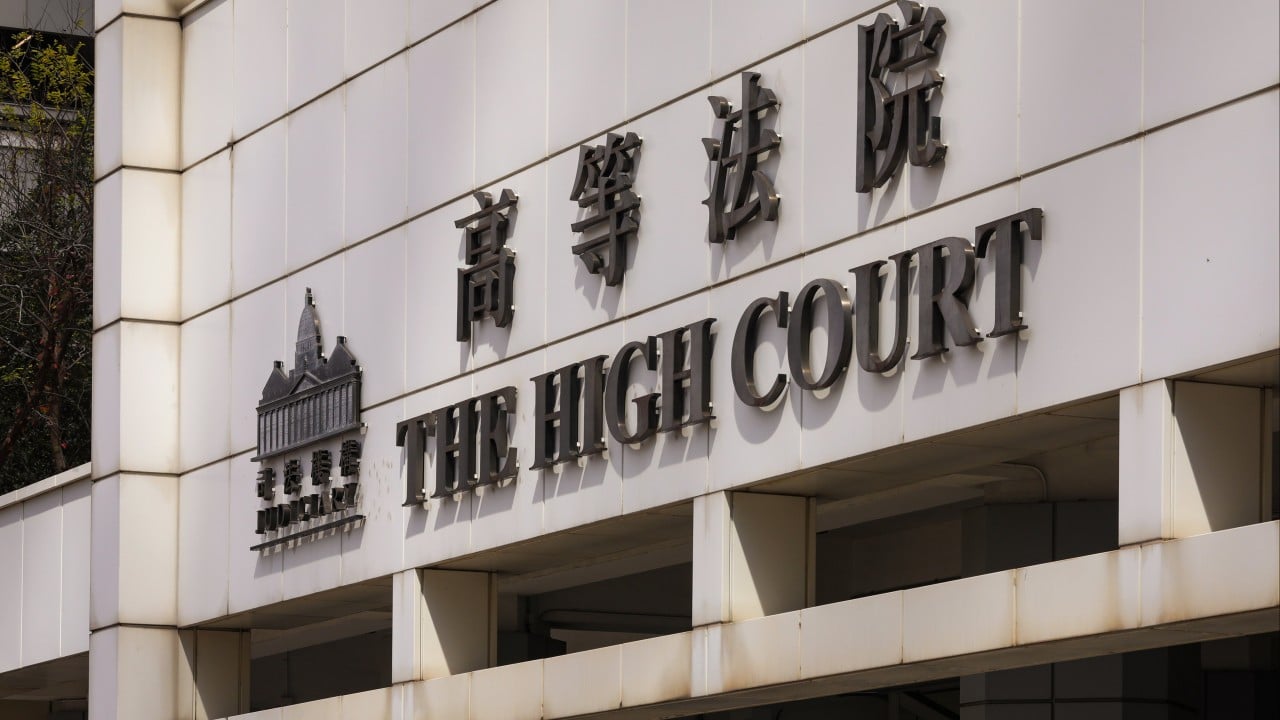
In the High Court, the legal system attempted to perform its most difficult alchemy: turning a human life into a chronological sentence.
Mr. Justice Judianna Barnes had to weigh the scales. On one side, a death. A man who will never again ride a bike through the streets of Hong Kong or share a meal with his family. On the other side, a defendant who didn't set out to kill.
Chan Wing-yan pleaded guilty to manslaughter. This wasn't a calculated assassination. It was a "spur-of-the-moment" eruption of temper over a transaction gone wrong. The court acknowledged the lack of premeditation. They saw a man who stayed at the scene, who called for help, who was, in his own way, horrified by the gravity of his own hands.
Yet, the law must be a deterrent. It must remind us that our hands are our own responsibility, even when our blood is boiling.
Four years.
To a teenager, four years is an eternity. To a middle-aged man, it is a significant chunk of his remaining productive life. In prison, time is a different currency. It is measured in the arrival of mail, the quality of the midday meal, and the slow transit of shadows across a courtyard. While the city outside evolves—new skyscrapers rising, the harbor changing shape, the relentless march of technology—Chan will remain frozen in the amber of the correctional system.
The Psychology of the Transactional Grudge
Why did a thousand dollars lead to a grave?
Psychologists often point to "displaced aggression." Perhaps it wasn't just about the bike. Maybe it was a bad week at work, a looming rent payment, or the general, grinding claustrophobia of living in one of the most densely populated places on Earth. In Hong Kong, space is at a premium. Patience is even scarcer.
When we engage in person-to-person sales, we enter a fragile social contract. We trust the stranger to be honest about the gears and the brakes. When that trust feels violated, it feels like a personal assault. The bike becomes a symbol of every time we’ve been cheated, every time we’ve been overlooked, and every time the world felt unfair.
The irony is that the 1,000 dollars—the very thing that sparked the fire—is now utterly meaningless. It couldn't pay for a fraction of the legal fees. It couldn't cover a day of hospital costs. It certainly couldn't buy back the peace of mind lost by everyone involved.
The Ripple Effect
We often view crime as a straight line between a perpetrator and a victim. The reality is more like a stone thrown into a pond.
The ripples extend to the families. There is the family of the deceased, who must navigate the bureaucratic nightmare of a death certificate and the hollow silence of a home that feels too big. Then there is the family of the incarcerated. They lose a provider, a father, a son. They carry the stigma of the "killer's family," a social weight that in some cultures is harder to bear than the financial loss.
Then there are the witnesses. The passersby who were simply out for a weekend ride and instead found themselves performing CPR on a dying man. Their relationship with those streets is forever altered. Every time they pass that specific bend in the cycling track, the memory will resurface—the heat, the shouting, the sudden, terrible stillness.
The Invisible Stakes
This story isn't just about a fight over a bicycle. It is a cautionary tale about the volatility of the human spirit. It’s about the thinness of the veil between a normal day and a life-changing tragedy.
We walk around with incredible power in our limbs. A single shove, a momentary lapse in restraint, can rewrite our destiny. The court’s decision to hand down a four-year sentence serves as a grim reminder that "I didn't mean to" is a cold comfort when a life has been extinguished.
In the high-speed pursuit of our lives, we often forget the value of walking away. We cling to our "rights" and our "money" as if they are the only things that define us. We forget that the most valuable thing we own is our ability to remain calm when the world is demanding we lose our minds.
The bicycle that sat between those two men is likely in a police evidence locker now, or perhaps it was sold for scrap long ago. It was a mundane object—aluminum, rubber, and chain. It was never worth a life. It was never worth four years in a cell.
As the sun sets over the New Territories tonight, the cycling tracks will be full of people. They will be riding past the spot where So Ka-ho fell. Most won't know the history of that patch of concrete. They will be focused on the wind in their faces and the path ahead. But for two families, that path ended on a Saturday in April, proving that the most expensive things we ever pay for are the ones we thought were cheap.
The true cost of that 1,000-dollar debt wasn't paid in cash. It was paid in the currency of a heartbeat and the ticking of a prison clock.