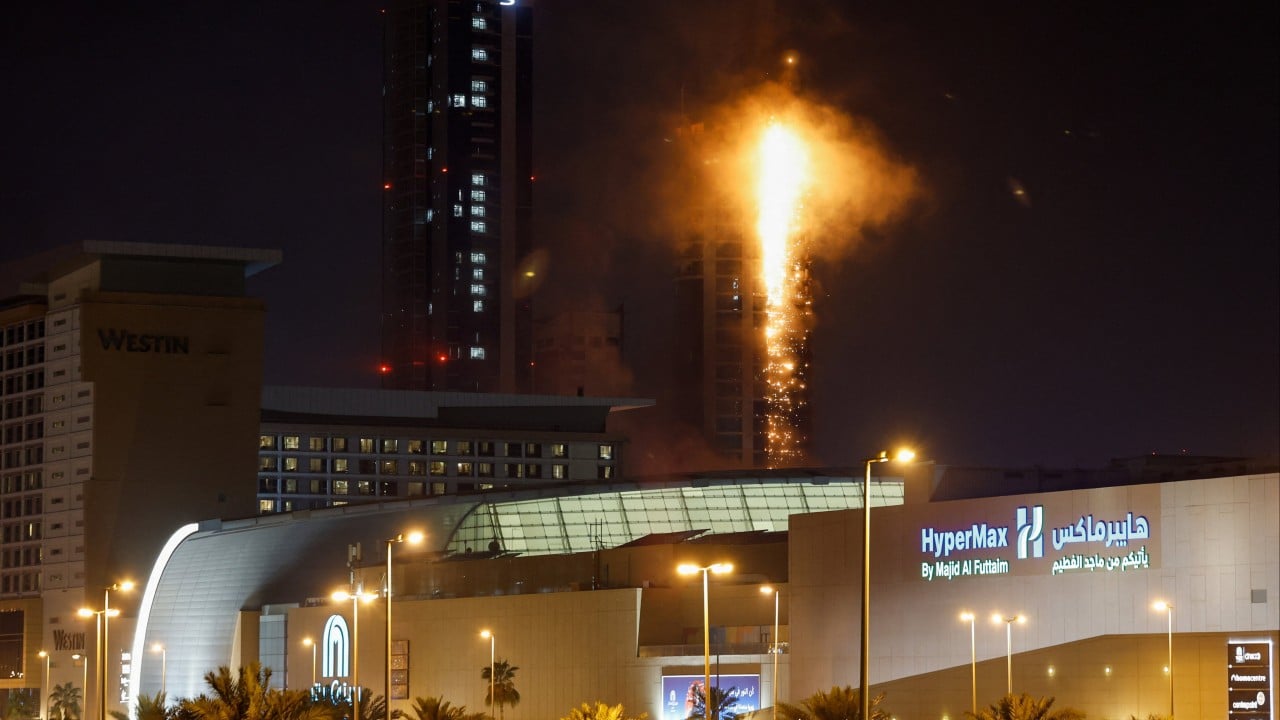
The hand-wringing has started. You’ve seen the headlines. Pundits are crying about the "collapse of international order" and a "descent into the law of the jungle" following recent strikes on Iranian infrastructure. They want you to believe we are sliding into a dark age of lawless chaos where might makes right and the rules of engagement have been shredded.
They are wrong. Dead wrong.
What we are witnessing isn't the end of the rules. It is the brutal, long-overdue calibration of a system that has allowed shadow players to exploit "peace" as a weapon for forty years. The "law of the jungle" isn't coming; it has been the operating manual for Tehran’s proxy networks while the West hid behind the finger-wagging bureaucracy of the UN.
If you think a surgical strike on a military complex is "lawless," but a decade of Houthi pirates choking global trade is "geopolitics," your compass is broken. We aren't descending into chaos. We are finally acknowledging the reality of 21st-century friction.
The Myth of the Neutral Status Quo
The core argument from the "stability" crowd is that state-on-state strikes violate a sacred equilibrium. This is a fantasy. It presumes that before these strikes, there was a baseline of order.
Let’s look at the data. I’ve spent years tracking maritime logistics and supply chain risk. Since 2023, the Red Sea—a primary artery for 12% of global trade—has been a shooting gallery. That wasn't an "orderly" environment. It was a unilateral tax on the world’s economy imposed by non-state actors funded by a state actor.
When a nation-state uses proxies to conduct war while claiming diplomatic immunity, they aren't "respecting the rules." They are hacking them. They are using the West’s obsession with "de-escalation" as a shield to advance a kinetic agenda.
True stability isn't the absence of noise. It’s the presence of consequences. For too long, the cost of subverting global security was zero. Now, the bill is due.
Precision is the New Sovereignty
The "law of the jungle" implies indiscriminate violence. But look at the technical reality of modern engagement. We are seeing a shift from the carpet-bombing philosophies of the 20th century to surgical, data-driven erasure.
When a high-value target is neutralized with zero collateral damage to the surrounding civilian blocks, that isn't a breakdown of civilization. It’s the pinnacle of it. It’s the application of extreme accountability.
In the old world, "sovereignty" was a blanket that covered everything inside a border, including the right to plan terror with impunity. In the new world, sovereignty is conditional. If you use your soil to launch drones at merchant ships, you have already forfeited the protections of that soil.
Why "Proportionality" is a Trap
Critics love the word "proportionality." They argue that a direct strike is a disproportionate response to proxy harassment. This is a loser’s logic.
If someone stabs you with a needle every day for a year, is it "disproportionate" to finally knock them out? The cumulative weight of gray-zone warfare—cyber attacks, maritime mining, and funding insurgencies—far outweighs a single, kinetic response on a command center.
The obsession with proportionality is what leads to forever wars. It’s a policy of "just enough" that ensures nothing ever actually ends. Breaking the cycle requires a shift in the math. You don't match the energy; you change the physics of the encounter.
The Death of the Shadow War
The most uncomfortable truth for the "international law" advocates is that transparency is actually increasing.
For decades, the Middle East operated in a "deniable" haze. Iran could claim they didn't control the militias. The West could pretend they believed them. This "don't ask, don't tell" policy of international relations allowed everyone to avoid a "big war" while thousands died in "small wars."
The recent strikes have dragged the conflict into the light. This is a good thing.
- Attribution is Instant: With modern SIGINT (Signals Intelligence) and satellite arrays, the "who did it" question is answered in minutes, not months.
- Accountability is Direct: You can no longer hide behind a masked insurgent. If the drone was built in your factory, the factory is a target.
- The Bluff is Called: It forces states to decide if they actually want a total war or if they were just enjoying the free pass of the shadow era.
I’ve sat in rooms where "risk mitigation" meant doing nothing and hoping the problem went away. It never does. It just gets more expensive. These strikes aren't a gamble; they are a necessary audit of a bankrupt security policy.
The Technology of Deterrence
We need to talk about the hardware because the pundits don't understand it. They think in terms of "escalation ladders." The tech thinks in terms of "asymmetric denial."
The rise of autonomous systems and precision-guided munitions (PGMs) has changed the cost-benefit analysis of warfare. In the 1990s, taking out a hardened site required a massive carrier group and weeks of sorties. Today, it requires a small window of opportunity and a few high-velocity assets.
This creates a "Goliath’s Dilemma." The more technologically advanced a nation is, the more it has to lose from a messy, protracted conflict. Conversely, it gives that nation the ability to strike with such surgical speed that the enemy has no time to escalate.
The "law of the jungle" implies a long, bloody brawl. What we have now is "The Law of the Scalpel." It’s fast. It’s quiet. It’s over before the diplomats have finished their morning coffee.
People Also Ask: Isn't this going to start World War III?
This is the favorite question of the fear-mongers. The answer is: No.
World War III happens when two massive power blocs think they have a 50/50 chance of winning a total conflict. Nobody in the current theater thinks they have those odds. Tehran knows exactly what a full-scale conventional war looks like, and they know their air defenses are about as effective as a screen door in a hurricane.
The loud rhetoric is for domestic consumption. Behind closed doors, the goal is survival. Direct strikes actually prevent world wars by showing the aggressor exactly where the "red line" is, rather than letting them drift into a fatal miscalculation.
Stop Mourning a System That Never Worked
The "International Order" we are supposedly losing was a post-WWII relic that stopped being effective when the Cold War ended. It was built for a world of clear borders and uniformed armies. It has no mechanism for dealing with a state that operates like a venture capital firm for terror.
We aren't entering a lawless era. We are witnessing the birth of a new, more honest framework.
- Rule 1: Your proxies are your responsibility.
- Rule 2: Sovereignty is not a license for subversion.
- Rule 3: Deniability is dead.
If you find these rules scary, it’s probably because you’ve been benefiting from the lack of them. For the rest of the world—the people who just want their cargo ships to arrive on time and their borders to mean something—this isn't a descent into the jungle. It’s the clearing of the brush.
The pundits will keep crying about "norms" while the adults in the room deal with the reality of force. You don't negotiate with a fire. You deprive it of oxygen. That’s not lawlessness. That’s physics.
Don't look for a return to the "rules." Look for the courage to enforce the ones that actually matter. The jungle was already here; we’re just finally bringing the lights.
Stop asking when we’ll get back to normal. This is the new normal. Adapt or get out of the way.