The heat in Dubai does not just sit on your skin; it presses into your lungs. On a Tuesday afternoon at a construction site near the edge of the city, Arjun wipes a mixture of grit and salt from his forehead. He is twenty-four, from a village in Kerala that most people in this glittering metropolis couldn't find on a map. He is here because of a debt, a dream of a concrete house for his mother, and a contract he signed in a language he barely speaks.
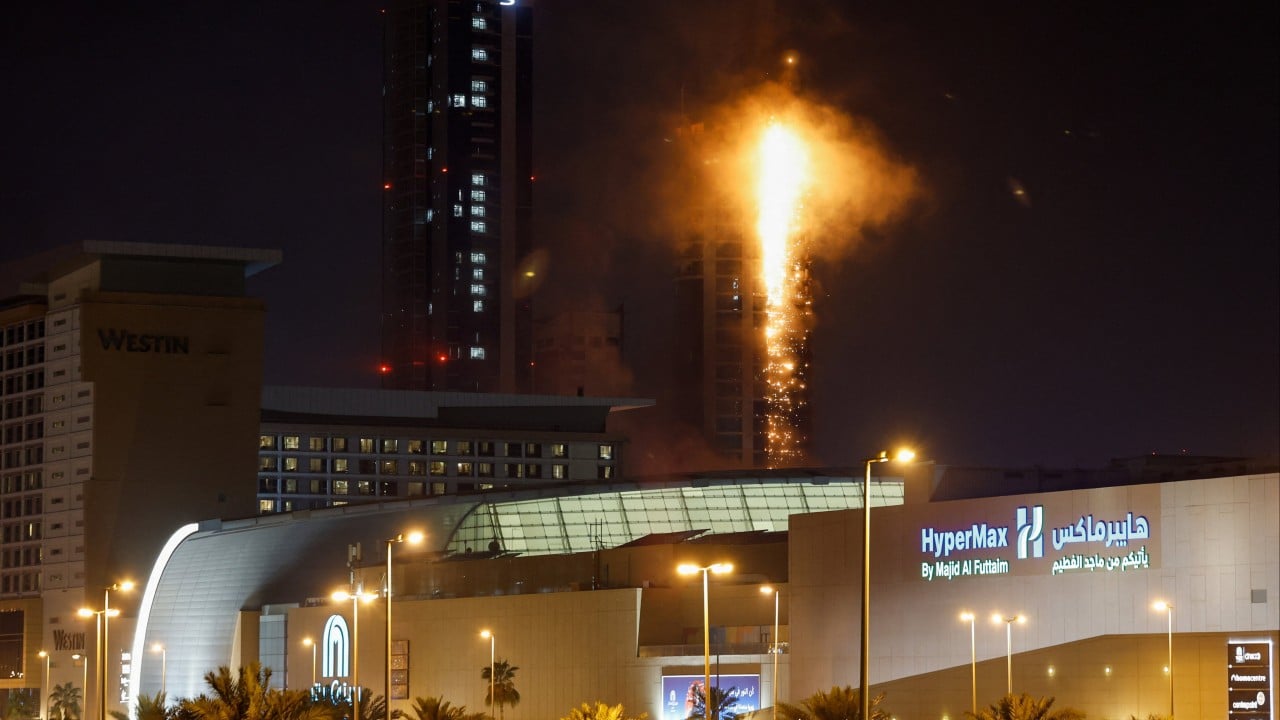
But today, Arjun isn't looking at the rising skeleton of a luxury hotel. He is looking at his phone. The screen flickers with a grainy video of a night sky over the Persian Gulf, illuminated by the jagged orange streaks of interceptor missiles. If you liked this article, you should look at: this related article.
For decades, the Gulf has been the world’s great engine room. It is powered by a human fuel of nearly thirty million migrant workers—men and women from India, Pakistan, the Philippines, and Nepal who build the towers, clean the hospitals, and drive the tankers. They are the backbone of the region. They are also, as the shadow of a widening war with Iran stretches across the water, the most vulnerable people on the planet.
The Geography of a Fragile Hope
To understand the stakes, you have to look past the oil prices and the diplomatic cables. You have to look at the narrow neck of the Strait of Hormuz. It is a physical choke point for global energy, but for a delivery driver in Riyadh or a nurse in Abu Dhabi, it is a psychological cage. For another perspective on this development, check out the latest update from Al Jazeera.
If the current skirmishes escalate into a full-scale regional conflagration, these millions of workers have nowhere to go. They are caught between a desert and a sea that may soon become a front line.
Consider a hypothetical, though statistically grounded, scenario: A major port city in the Emirates or a refinery town in eastern Saudi Arabia comes under sustained drone or missile fire. The local citizens, possessing wealth and multiple passports, can flee. They can book flights to London or retreats in the mountains.
Arjun cannot.
His passport is often held by his employer. His savings are sent home the moment they hit his account. He lives in a labor camp—spartan, crowded dormitories located on the industrial outskirts of the city. These camps are rarely equipped with hardened bomb shelters. There are no evacuation drills for the men who pave the roads. When the sirens wail, the hierarchy of survival becomes painfully clear.
The Remittance Lifeline is Fraying
The danger isn't just physical. It is existential for the families left behind.
In many Himalayan villages, the entire economy is built on "Manpower." It is a grim term for the export of sons. In 2023, India received over $110 billion in remittances, a significant portion of which trickled in from the Gulf. These small, monthly transfers of 500 or 1,000 dirhams are what keep schools open in rural Bihar and pharmacies stocked in Colombo.
When war breaks out, the banking systems stutter. If the ports close or the oil stops flowing, the work stops. For a migrant worker, a week without work isn't just a setback; it is a catastrophe that ripples across the Indian Ocean.
Suppose a Filipino domestic worker, Maria, is trapped in a villa during a blockade. She isn't just worried about her own safety. She is calculating the cost of the rice her children in Manila won't be able to buy next month. The "Invisible Anchors" of the Gulf are connected to their home countries by a thousand thin, digital threads of money. War cuts those threads.
A History of Being Left Behind
We have seen this script before, though we rarely bother to memorize it. During the 1990 invasion of Kuwait, hundreds of thousands of Indian and Pakistani workers were stranded. They fled into the desert, living in makeshift camps with dwindling water, waiting for a rescue that took weeks to materialize.
They were the last to be evacuated.
The logistical nightmare of moving millions of people out of a war zone is staggering. Most Gulf nations do not have the infrastructure to repatriate their entire foreign workforce simultaneously. The sheer volume of humanity makes any traditional evacuation plan look like trying to drain an ocean with a thimble.
Furthermore, the legal status of these workers—often tied to a specific sponsor under the kafala system—means they cannot simply cross a border to find safety. To leave without permission is, in many jurisdictions, a crime. In the chaos of war, the law becomes a trap.
The Silence of the Embassies
Back at the construction site, Arjun asks his foreman what will happen if the "big one" hits. The foreman, a man who has spent twenty years in the sun, simply shrugs and points to the crane. "The work continues," he says.
There is a terrifying silence from the home governments of these workers. While Western embassies issue "Level 4: Do Not Travel" advisories and prepare charter flights for their citizens, the embassies representing the millions of South Asians often lack the resources or the political will to challenge the host nations.
They are stuck in a diplomatic dance. They need the jobs for their people, and they need the foreign currency. To complain too loudly about the lack of safety for their citizens is to risk losing those jobs to a more compliant neighbor.
It is a market of human desperation.
The Cost of a Silent Sky
If you stand on the Corniche in Doha or the beachfront in Muscat, the beauty of the Gulf is undeniable. The turquoise water meets the white sand in a perfect, artificial harmony. But look up. The sky is no longer just a path for commercial jets. It is a corridor for hardware.
The psychological toll of living under a flight path of potential destruction is heavy. For a migrant worker, there is no "work from home." There is no "mental health day." There is only the rhythmic clatter of tools and the constant, low-thrumming anxiety that today might be the day the Strait closes.
We often talk about war in terms of "strategic assets" and "territorial integrity." We talk about the price of Brent Crude. We rarely talk about the price of a life in a blue jumpsuit.
The reality is that the Gulf economies are not just built on oil; they are built on the assumption of peace. If that peace shatters, the most expensive skyscrapers in the world will become the most expensive monuments to a workforce that was forgotten before the first shot was even fired.
Arjun puts his phone away. He picks up his shovel. The sun is setting, casting long, distorted shadows across the dust. For now, the sky is quiet. But he knows, and we should know, that he is an anchor in a rising tide, and the chain is getting shorter every day.
Somewhere, thousands of miles away, a mother waits for a phone call that says the money has arrived. She doesn't see the missiles. She only sees the empty seat at the dinner table. And that is the true front line of the war—not a map of the Gulf, but a kitchen table in a village where the lights stay on only as long as the desert remains silent.