The salt air in the West Philippine Sea doesn't just corrode the steel of a hull. It gets into the pores of your skin, a constant, gritty reminder that you are standing on a frontier that shifts with every wave. Out there, the horizon isn't a line. It is a question.
Imagine a man standing on the deck of a white-hulled vessel. Let’s call him Captain Reyes—a composite of the men who have spent more nights watching radar blips than watching their children grow up. He isn't thinking about international maritime law or the 1982 United Nations Convention on the Law of the Sea. He is thinking about the distance between his ship and the massive, grey-clad Chinese Coast Guard vessel that has been shadowing him for six hours. The grey ship is bigger. It is faster. It is silent, save for the low thrum of engines that vibrates through the water and into the soles of Reyes’s boots.
This isn't just a game of chicken. It is a slow-motion chess match where the board is liquid and the pieces are human lives.
Recently, the Philippine government did something that, on paper, looks like a routine human resources update. They promoted a high-ranking Coast Guard officer. In the sterile language of a press release, it was an administrative move. In the reality of the South China Sea, it was a "deliberate signal."
The Language of the Epaulette
To understand why a promotion matters, you have to understand the geography of the ego and the geometry of power. In the high-stakes theater of the South China Sea, every gesture is a sentence. When a nation promotes the very people who have been on the front lines of "water cannon diplomacy," they aren't just saying good job. They are saying keep going.
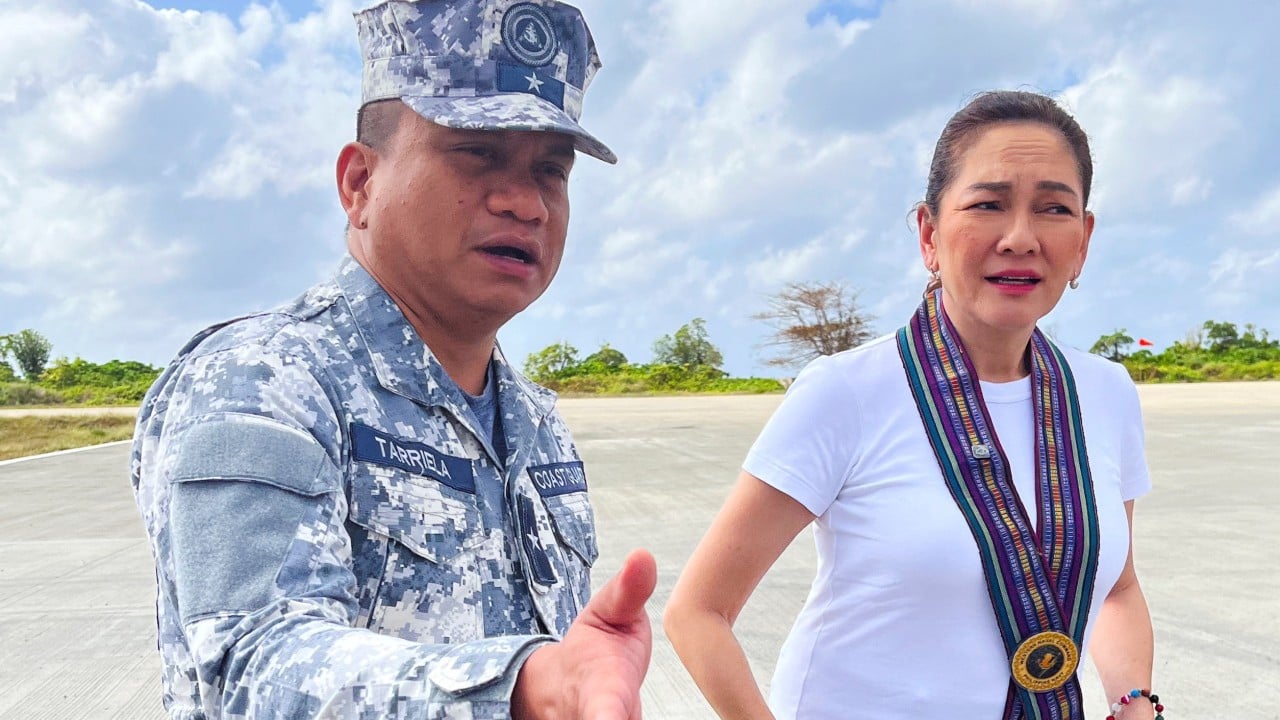
The official at the center of this move is Commodore Jay Tarriela. If you follow the news, you know him as the man who turned the Philippine Coast Guard’s (PCG) communication strategy into a weapon. Before Tarriela, the skirmishes at Second Thomas Shoal or Scarborough Shoal were quiet affairs, buried in the back pages of diplomatic cables. He changed the math. He brought cameras. He brought journalists. He made the invisible visible.
Promoting an officer like this is a calculated roar. It tells the giants across the water that the Philippines is not backing down; it is doubling down on a strategy of transparency. It validates the "assertive transparency" model—a way of fighting back not with missiles, but with high-definition video.
The Invisible Stakes
Why does this matter to someone sitting in a coffee shop in Manila, or London, or New York?
Because the South China Sea is the world’s jugular. One-third of global shipping passes through these waters. The smartphone in your pocket, the grain in your bread, and the fuel in your car likely spent time on a vessel navigating these disputed waves.
But for the Filipino fisherman in a wooden bangka, the stakes are even more primitive. It’s about the right to cast a net without being chased away by a steel prow. It’s about the dignity of being able to work in your own backyard.
When the government adds a star or a stripe to an officer's shoulder, they are signaling to that fisherman: We see you. We are building a wall of people where we lack a wall of ships. ### The Strategy of the Underdog
The Philippines is playing a game where they are outgunned in every physical metric. China’s Coast Guard is the largest in the world. Their ships are essentially frigates without the "warship" label. They have the "Great Wall of Sand"—reclaimed islands turned into fortresses.
So, how does a smaller nation respond?
They use the truth as a force multiplier. By promoting the architects of this transparency strategy, the Philippines is cementing a new kind of defense doctrine. They are saying that the most dangerous thing you can do to a bully is turn on the lights.
Consider the psychological toll on the crew of a PCG vessel. They are often outnumbered five to one. They face blinding lasers and high-pressure water cannons that can shatter glass and deafen a sailor. In those moments, the "human element" isn't a buzzword. It’s a shivering kid in a life jacket holding a camera, trying to keep his hands steady while a 4,000-ton ship bears down on him.
The promotion of leadership is a message to that kid: Your courage is the official policy of this state.
The Friction of the Deep
There is a specific kind of tension that exists in the "Grey Zone"—that space between peace and war where no shots are fired, but everyone is sweating.
The move to elevate these officers happens against a backdrop of increasing friction. We’ve seen collisions. We’ve seen the "militarization" of maritime law enforcement. Usually, a Coast Guard is for search and rescue. It’s for catching smugglers. Here, it has become the vanguard of national sovereignty.
This isn't just about rocks and reefs. It’s about the rules of the world. If a larger power can simply ignore an international tribunal’s ruling—like the 2016 decision in The Hague that invalidated China’s "nine-dash line"—then the rules don't exist. They are just suggestions.
By promoting the men and women who stand in the way of that erasure, the Philippines is performing a daily act of defiance. It is a slow, methodical building of a national identity centered around the sea.
The Man on the Deck
Back to our Captain Reyes.
He sees the news of the promotions on a satellite feed. He looks at his crew. They are tired. They are hungry for something other than canned rations. Their ship is old, and the paint is peeling where the salt has won the battle.
But then he looks back at the grey ship on the horizon.
He knows that today, the world is watching. He knows that his government hasn't traded him away in a backroom deal. The new stars on the shoulders of his superiors are a promise that his presence in these waters is the most important thing his country is doing.
This isn't a "game-changer" in the way people usually mean it. It’s a "state-sustainer." It’s the slow, grinding work of staying put.
The ocean has a way of swallowing things whole. History, too, can be a deep, dark trench. But for now, the Philippines is choosing to shine a light into that darkness. They are elevating the people who refused to look away.
The star on an officer’s shoulder is small. It’s just a piece of metal. But out there, where the only other light is the moon reflecting off a disputed sea, it shines with the weight of an entire nation’s resolve.
The grey ships are still there. They aren't going anywhere. But neither is the man on the white ship. He adjusts his cap, feels the vibration of the engine beneath his feet, and orders the helmsman to hold the course.
The horizon is still a question. But his answer is written in the very stars he wears.