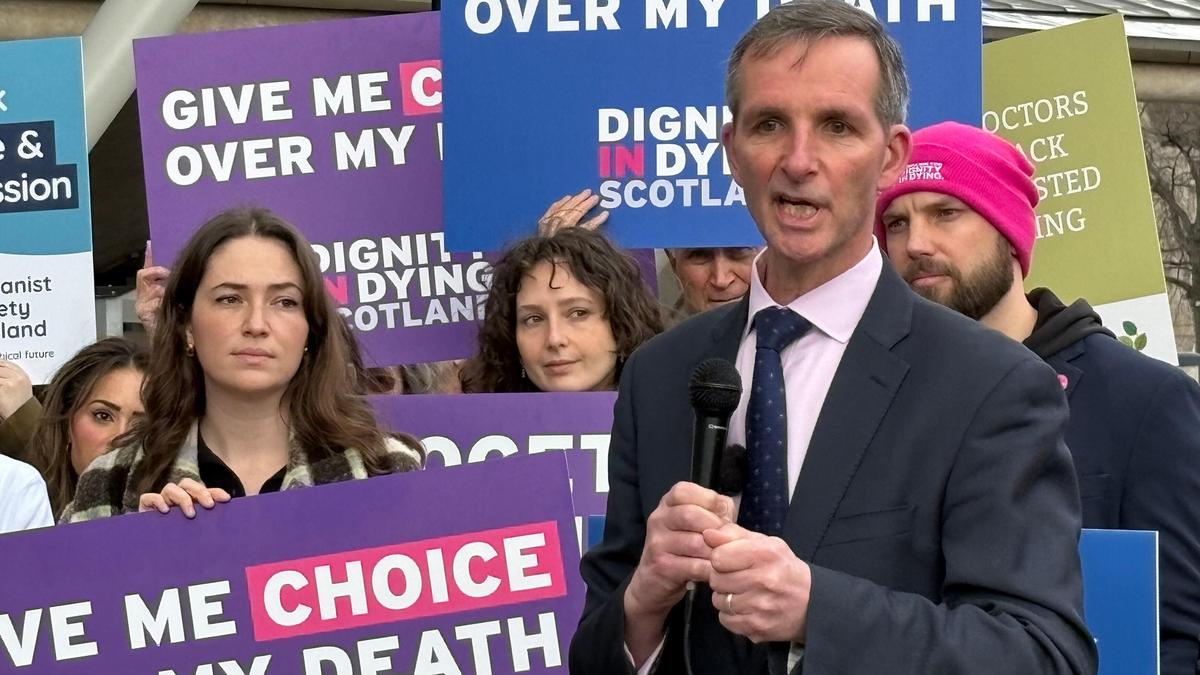
The Scottish Parliament has once again slammed the door on assisted dying, rejecting a landmark bill that many believed would finally bring the country into alignment with jurisdictions like Oregon or the Isle of Man. On March 17, 2026, MSPs voted 69 to 57 to defeat the Assisted Dying for Terminally Ill Adults (Scotland) Bill. The defeat was not merely a clash of ideology; it was a clinical, cold-blooded rejection driven by late-stage concerns over medical safeguards, the role of pharmacists, and the stark reality of Scotland’s struggling palliative care system.
While the bill, introduced by Liberal Democrat MSP Liam McArthur, initially enjoyed significant momentum, it ultimately collapsed under the weight of its own amendments and a surge of opposition from the medical establishment. The vote serves as a definitive signal: even with overwhelming public support, the legislative path to an assisted death remains blocked by the fear that a "right to die" could quickly morph into a "pressure to die" for the most vulnerable members of society.
The Architect of the Defeat
To understand why this bill failed after clearing its first parliamentary hurdle with 70 votes in 2025, one must look at the shifting stances of the people who would have to carry it out. For months, the debate was framed as a battle between secular humanists and religious traditionalists. However, the true turning point came when the Royal Pharmaceutical Society (RPS) and the Royal College of Psychiatrists moved from neutrality to active opposition.
In the final days before the vote, a crucial "conscience clause" designed to protect pharmacists from participating in the process was stripped from the text. This was a tactical error. It alienated healthcare professionals who felt they were being drafted into a process they found ethically abhorrent. Brian Whittle, a Conservative MSP who had previously signaled an openness to the bill, cited this specific loss of protection as a reason for his "no" vote.
The medical community’s warning was clear: the bill was becoming "unworkable." If the people responsible for dispensing the lethal medication don't trust the framework, the framework is dead on arrival.
The Shadow of Palliative Care
A recurring argument that haunted the Holyrood chamber was the state of Scotland's end-of-life care. Opponents, including the SNP's Ruth Maguire, argued that choice is an illusion when the alternative to assisted dying—high-quality, fully funded palliative care—is not universally available.
Maguire, herself a cancer survivor, gave a chilling testimony that resonated deeply with wavering lawmakers. She described the horror of a doctor raising the prospect of an assisted death while a patient is still weighing treatment options. Her argument was simple: in a system where social care is being cut and hospices are struggling for funding, offering death as a "treatment" is not an expansion of freedom. It is a surrender to the high cost of living.
The Coercion Trap
Lawmakers were also spooked by the "slippery slope" evidence presented by disability rights advocates. Pam Duncan-Glancy, the first wheelchair user elected to the Scottish Parliament, led a fierce campaign arguing that disabled people are often made to feel like a burden on the state and their families.
"Disabled people don't have real choices in life. It is inconceivable to suggest the introduction of assisted dying is about choice when we haven't even fixed the choices people need to live."
The bill attempted to mitigate these fears by requiring two independent doctors to verify that no coercion was taking place. However, critics argued that a 15-minute consultation is insufficient to detect the subtle, psychological pressure a family might exert on an elderly relative. By the time of the final vote, the "safeguards" that McArthur had spent years refining were viewed by the majority not as a shield, but as a sieve.
A Fragmented United Kingdom
The Scottish rejection creates a strange and messy legal patchwork across the British Isles.
- Isle of Man and Jersey: Both have approved assisted dying in principle, moving toward implementation.
- England and Wales: A similar bill is currently languishing in the House of Lords, where it faces a barrage of over 1,000 amendments intended to talk it into oblivion.
- Scotland: Now enters a period of legislative stasis, where the issue cannot be formally revisited for several years.
This divergence means "death tourism" will likely continue. Scots with the financial means will still travel to Switzerland, while those without will continue to face the "prolonged and traumatic" deaths that McArthur sought to prevent.
The Road Ahead for Holyrood
Liam McArthur has already signaled that this is not the end. The movement has seen a steady increase in parliamentary support—from 18 votes in 2010 to 57 in 2026. The demographic shift and the persistence of campaign groups like Dignity in Dying suggest that the question will return.
But for the next few years, the focus will shift from the right to die to the right to live well. If supporters of assisted dying want to win next time, they must first solve the crisis in palliative care. They must prove that an assisted death is a choice made in a vacuum of suffering, not a choice made because the state failed to provide a dignified life.
The immediate next step for those concerned with this issue is to monitor the Palliative Care (Scotland) Bill, which seeks to mandate minimum standards for end-of-life support.
Would you like me to analyze the specific amendments that led to the Royal Pharmaceutical Society's withdrawal of support?