The coffee in Mateo’s mug is lukewarm, but he doesn't notice. He is staring at a digital map of the Pacific Ocean, where a bloom of deep, bruised crimson is beginning to pulse against the coast of South America. It looks like a fever. In many ways, it is.
Mateo isn't a scientist at NOAA or a policy advisor in Brussels. He is a small-scale farmer in the central valley of Chile, and he has learned to read these maps the way his grandfather read the flight patterns of swallows. The crimson represents a rise in sea surface temperatures. It represents the weakening of the trade winds that usually push warm water toward Asia. It represents the return of El Niño.
By the early months of 2026, the data indicates that the brief reprieve of a "neutral" year is over. The giant is waking up again.
The Weight of a Single Degree
Temperature is a deceptive metric. We hear "one point five degrees" and we think of the difference between a light sweater and a heavy one. We think of the thermostat in the hallway. But when that measurement applies to the top layers of the world’s largest ocean, it isn't just a number. It is energy.
Massive, unbridled energy.
During an El Niño event, the heat buried in the ocean is exhaled into the atmosphere. It disrupts the jet streams, those invisible rivers of air that dictate where rain falls and where the sun parches the earth. When this happens in 2026, it won't be happening in a vacuum. It will be layered on top of a baseline global temperature that has already been ratcheted up by decades of carbon emissions.
Think of it as a house that is already uncomfortably warm. Now, someone has left the oven door open and turned the burners to high.
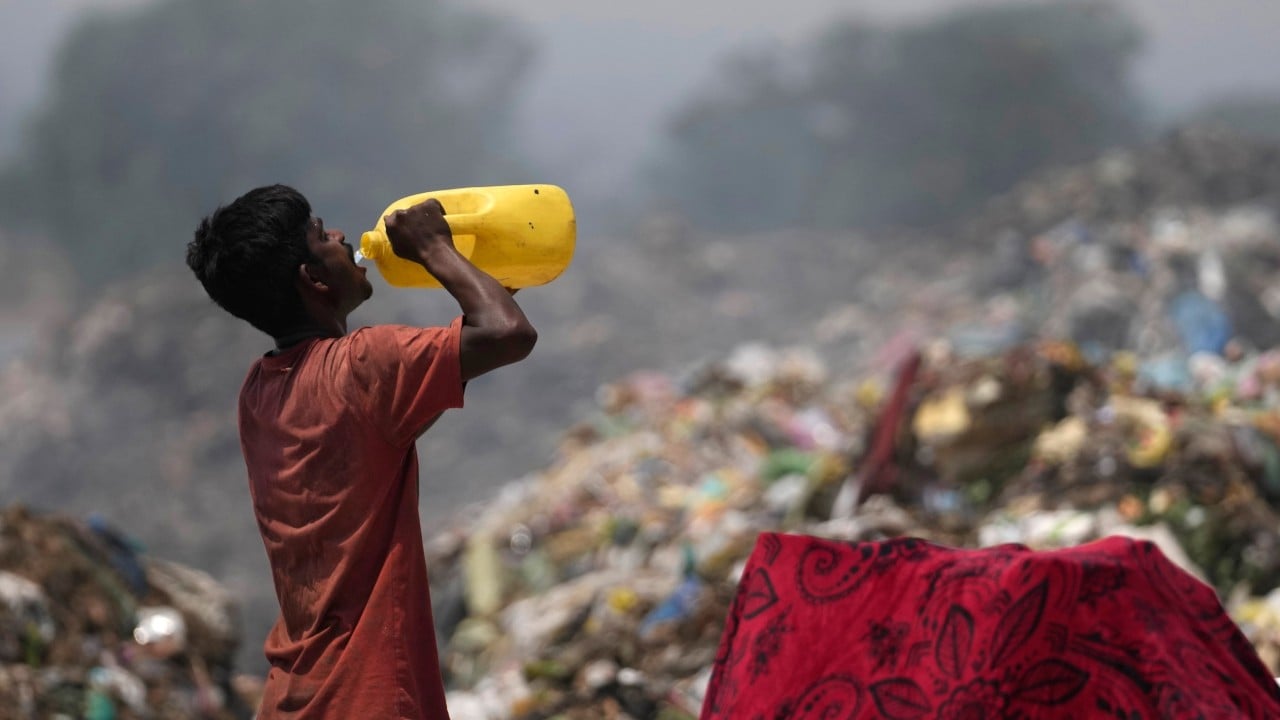
The heat doesn't stay at sea. It migrates. It settles over the corn belts of the American Midwest, the rice paddies of Southeast Asia, and the urban canyons of London and New York. For Mateo, the crimson on the screen means his irrigation cycles will need to double. It means his soil will turn to a fine, grey powder that the wind steals away. For a suburban family in Phoenix, it means the asphalt stays hot enough to burn skin long after the sun has set.
A Chain Reaction of Invisible Stakes
The narrative of climate change often feels like a slow-motion movie, but El Niño is a sprint. It accelerates the timeline.
In 2026, the economic ripples will likely start at the grocery store. It is a simple, brutal equation. When the monsoon rains in India are suppressed by El Niño's atmospheric shifts, the global sugar supply tightens. When droughts hit Australia, the price of wheat climbs. These aren't just statistics in a financial ledger; they are the reason a mother in a developing nation has to choose between school fees and a full pantry.
But the stakes go deeper than the wallet. They enter the bloodstream.
Warm water is a catalyst for more than just weather. As the ocean heats up, it loses its ability to hold oxygen. Massive die-offs of marine life aren't just ecological tragedies; they are the collapse of a primary protein source for millions. Meanwhile, on land, the shifting moisture patterns create the perfect breeding ground for mosquitoes. We see the spikes in Dengue fever and Malaria follow the El Niño map like a shadow.
The heat also targets the "silent" infrastructure we take for granted. Power grids, designed for the cooling needs of twenty years ago, groan under the weight of a billion humming air conditioners. In 2026, the risk of "brownout" transitions from a seasonal nuisance to a systemic threat. We are asking a 20th-century grid to survive a 21st-century fever.
The Myth of the Faraway Problem
There is a persistent, dangerous comfort in believing that the Pacific Ocean is "somewhere else." We look at the satellite imagery and see a beautiful, swirling marble of blue and white, disconnected from our morning commute or our weekend plans.
This is a lie.
The atmosphere is a single, interconnected lung. When it breathes in over the Pacific, it breathes out over the Atlantic. In 2026, the "teleconnections"—the scientific term for these long-distance weather links—will likely cause a shift in the hurricane season. While El Niño often suppresses hurricanes in the Atlantic due to increased wind shear, it can supercharge storms in the Pacific.
Consider the "Atmospheric River." These are narrow corridors of concentrated moisture in the atmosphere. During an El Niño year, these "rivers in the sky" can shift their aim, dumping months' worth of rain on the California coast in a matter of days. The result is a paradox: a landscape that is burning one month and sliding into the sea the next. Mudslides are just the ocean’s way of reclaiming the land it parched a season earlier.
We are not spectators to this event. We are participants.
The Digital Twin and the Human Choice
We have tools now that Mateo’s grandfather couldn't have imagined. Supercomputers can now run "digital twins" of the Earth’s climate, simulating the 2026 El Niño before it even fully forms. We can see the probability of crop failure months in advance. We can predict which coastal cities will face the highest storm surges.
But data is not a shield. It is only a map.
The real challenge of 2026 isn't the heat itself, but our reaction to it. Do we hoard resources, or do we stabilize the global supply chain? Do we ignore the heat death of elderly neighbors in our cooling apartments, or do we build community resilience?
The return of El Niño is a reminder of our fragility, yes, but also of our profound connectivity. A fisherman in Peru and a tech worker in Seattle are bound together by the temperature of the water at the equator. If the fisherman’s nets come up empty, the tech worker’s cost of living rises. If the tech worker’s carbon footprint remains unchecked, the fisherman’s home is swallowed by the rising tide.
The Breaking of the Cycle
There is a temptation to view 2026 as an anomaly, a "bad year" to be survived until the cycle swings back to the cooling influence of La Niña.
That view is a luxury we can no longer afford.
The cycles are changing. The peaks are getting higher, and the valleys are getting warmer. The "neutral" years now feel like the hot years of our childhood. We are living on a planet that is fundamentally shifting its thermal balance. El Niño is no longer a guest; it is a landlord demanding a higher rent every time he visits.
Mateo shuts down his laptop. The room is dark, save for the faint glow of the charging light on his phone. He walks outside and feels the air. It is too still. Too dry. He thinks about the seeds he has already planted and the ones he is holding back, waiting for a sign that the rain might actually come.
The Pacific is thousands of miles away, but he can hear it in the silence of his wilting fields. It is a low, thrumming vibration of a world out of sync. He knows that by the time the rest of the world feels the heat of 2026, he will have already lived through its beginning.
The giant is not just waking up. It is standing up. And we are all standing in its shadow.
There is no "normal" to return to, only a new rhythm to learn, a faster, hotter dance on a floor that is slowly beginning to smoke.